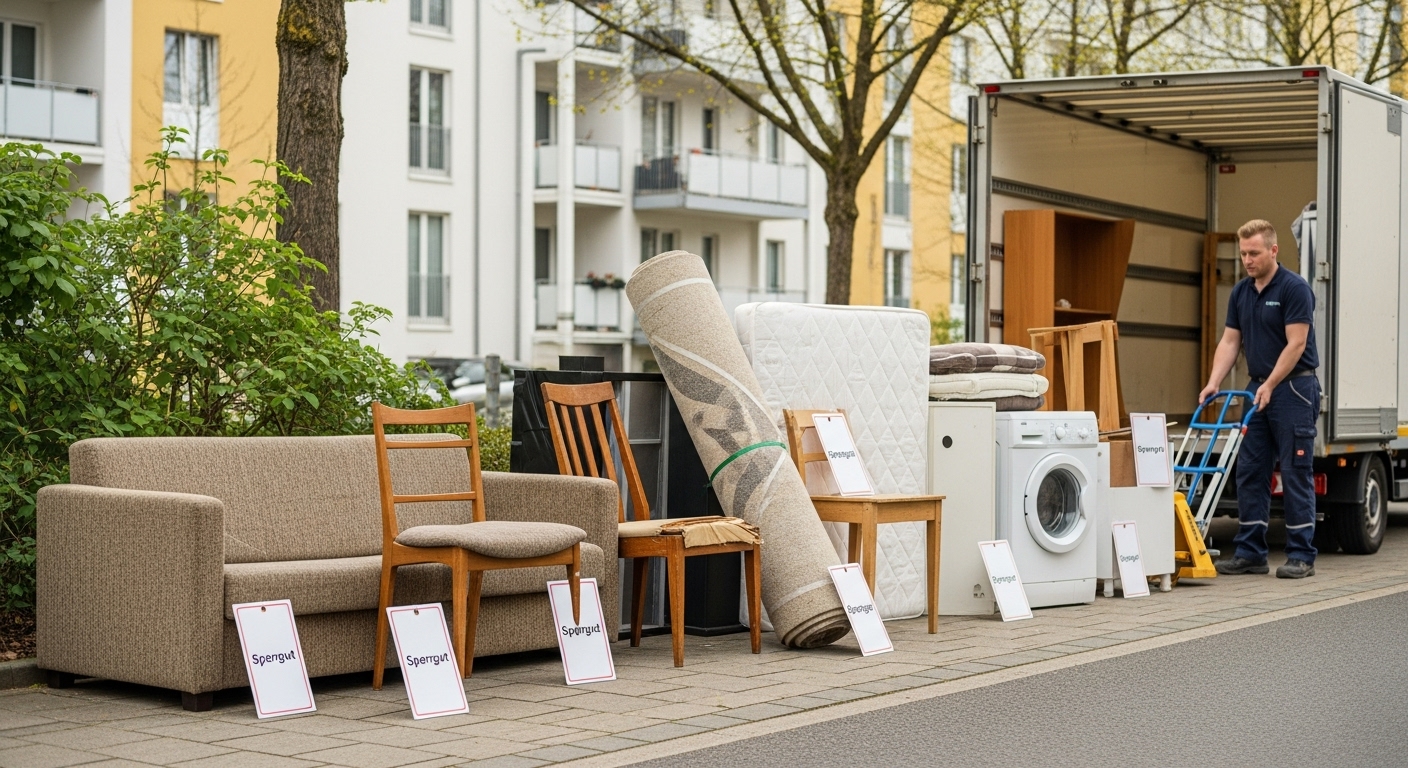
Anyone who occasionally sends parcels knows the routine: pack the goods, seal the box, attach the shipping label and take it to the post office. But what happens when the shipment exceeds the usual limits? A bicycle, a bumper or a bulky floor lamp simply will not fit into a standard cardboard box. In such cases, the term “bulky item” applies.
Transporting such freight requires special logistics processes. This guide explains exactly what falls into this category, what costs may arise and how to ensure smooth shipping.
Definition: When Is a Shipment Considered Bulky?
A shipment is classified as bulky based on the physical characteristics of the parcel. If a package does not comply with the standard dimensions specified by transport providers, it is categorised as bulky freight.
The classic criteria for bulky item classification:
Exceeding maximum dimensions: With most shipping providers (such as DHL or Hermes), a standard parcel must not exceed dimensions of 120 x 60 x 60 cm.
Shape factors: Round objects, rolls, car tyres or freight with protruding parts cannot be stacked properly.
Packaging material: Shipments packed in sacks, wood, metal or unstable plastic wrapping may damage automated sorting systems.
Any freight item that must be sorted manually because it would obstruct the automated sorting facilities in parcel hubs is considered bulky freight from a logistics perspective. According to industry statistics, this affects around 5 to 7% of the total global parcel volume in e-commerce.
Dimensions Compared: DHL, Hermes and Others
The size limits vary depending on the shipping provider. Here is an overview of the most important transport companies for private and commercial shipping in Germany:
Provider
Maximum Dimensions for Standard Parcels
When Is It Considered Bulky? / Limits
DHL
120 x 60 x 60 cm, max. 31.5 kg
Longest side over 120 cm, width over 60 cm, or length + 2 x width + 2 x height (girth measurement) over 300 cm. Maximum weight: 31.5 kg.
Hermes
Sum of longest and shortest side max. 120 cm, max. 31.5 kg
Third dimension exceeds standard measurements. Maximum: length 200 cm, girth 300 cm.
DagoExpress (freight forwarding)
Flexible / pallet shipping
Anything exceeding standard parcel dimensions or 31.5 kg. Ideal for heavy goods over 50 kg up to full truck loads.
Important information about girth measurement:
The formula is always calculated as follows:
Girth measurement = length + 2 x width + 2 x height
Always measure at the outermost points, including any protrusions in the packaging.
How Much Does Bulky Item Shipping Cost?
Since bulky freight must be handled and sorted manually, parcel services charge a significant surcharge. With traditional parcel providers such as DHL, the bulky item surcharge for domestic shipments is usually around €20 to €30 in addition to the regular parcel price.
Overview of the pricing structure (guideline values):
Standard parcel up to 31.5 kg + bulky surcharge: total costs often range between €35 and €50.
Weight over 31.5 kg: parcel services strictly refuse transport. This is where specialised transport companies become essential.
Freight forwarding shipment: calculated according to volumetric weight or pallet space. For heavy and extremely bulky goods, this is often the more economical and safer option.
Commercial senders should consider specialised B2B logistics providers. Companies that regularly ship large goods can negotiate substantial discounts through general cargo networks. To save costs, it is advisable to use a quick online price calculator for freight forwarding transport in order to compare daily freight rates.
Transport damage involving non-standard goods is frustrating and expensive. In addition, service providers may refuse liability if the packaging does not comply with their guidelines. Deutsche Post AG regularly points out that shipments must be able to withstand a drop from almost one metre.
Padding sensitive areas
Protect all corners, edges and protruding parts generously with foam or thick bubble wrap. Secure the padding firmly with strong adhesive tape.
Constructing the outer packaging
Use sturdy double- or triple-wall corrugated cardboard. If no suitable box is available, cut cardboard sheets to size and wrap them around the goods like a custom-fitted shell. No exposed goods should remain visible.
Completely eliminating empty spaces
Movement inside the box leads to damage. Fill all gaps entirely with crumpled paper or packing chips. The item must no longer move inside the packaging.
Closing and securing the shipment
Do not save on adhesive tape. Wrap the entire parcel several times in a criss-cross pattern. Use tear-resistant parcel tape, preferably reinforced with fibres.
Freight Forwarder or Parcel Service: Which Is Better?
The decision mainly depends on two factors: weight and sensitivity.
A parcel service is suitable for light but bulky items such as a fishing rod, a large lightweight painting or a long roll of carpet. As long as the weight remains below 31.5 kg, parcel shipping is an option.
A freight forwarding company is the right choice once the shipment exceeds 31.5 kg or if the goods are particularly valuable and fragile (for example washing machines, furniture or engine repair parts). Freight forwarders usually transport such goods on pallets. This significantly reduces the risk of damage because the goods are moved mechanically using pallet trucks or forklifts rather than being handled manually.
FAQ – Frequently Asked Questions About Bulky Freight
Can I send car tyres as a standard parcel?
No, generally not. Loose car tyres are round and tend to roll away on the automatic sorting belts in depots. They must either be packed squarely in cardboard packaging (which may then qualify as standard dimensions) or declared as bulky freight and paid for accordingly.
What happens if my parcel is declared as standard but is actually bulky freight?
The parcel will either be sorted out at the departure depot and returned to you, or the service provider will continue transporting it and later charge you the bulky freight surcharge along with a processing fee. This often results in significant delivery delays.
How exactly is the girth measurement calculated?
The girth measurement determines the total dimensions. The formula is:
1 x longest side + 2 x width + 2 x height
If the result exceeds 300 cm, shipping through traditional parcel services is generally no longer possible.
 Dansk
Dansk
 Deutsch
 Eesti
Eesti
 English (GB)
 Español
 Français
 Hrvatski
 Italiano
 Latviešu valoda
 Lietuviškai
 Magyar
 Nederlands
 Norsk Bokmål
 Polski
 Português
 Română
 Slovenčina
 Slovenščina
 Suomi
Suomi
 Svenska
 Čeština
 Ελληνικά
 Русский
 Українська
 български
 العربية
 中文 (中国)
 English