Freight Forwarding for Private Customers? Here’s How!
Anyone wanting to ship large items privately often faces a challenge: parcel services usually reject heavy consignments over 31.5 kg. This is where freight forwarding services for private customers come into play. Whether you want to ship a washing machine, transport inherited belongings or arrange affordable pallet shipping – modern logistics providers such as DAGO Express make the process as simple as booking a parcel today. In this guide, you will learn how to have bulky goods collected professionally while saving money at the same time. Professional planning, transparent costs and reliable handling make freight forwarding attractive for private individuals as well. Anyone looking to save time and avoid risks can benefit greatly from these advantages.
Key Facts at a Glance
Freight forwarders can also be booked by private customers, not only businesses
Ideal for bulky, heavy or valuable goods
Collection, transport and delivery are professionally organised
Insured shipping ensures a high level of security
International transport including customs clearance is also possible
Can Private Individuals Hire a Freight Forwarder?
Yes, freight forwarders can also be booked by private customers. They handle collection, transport, documentation and delivery, ensuring safe and stress-free shipping of personal goods.
Freight Forwarders Are Not Just for Businesses
Many people assume that freight forwarders only work for companies. This is a common misconception. In reality, many freight forwarding services are specifically aimed at private customers as well. Traditional parcel services quickly reach their limits when dealing with bulky or heavy goods. A freight forwarder provides the right solution here. Suitable vehicles, trained staff and the necessary logistics infrastructure are all available. This means even complex transports can be carried out safely. For private individuals, this results in greater convenience and less effort.
How to Book a Freight Forwarder as a Private Customer
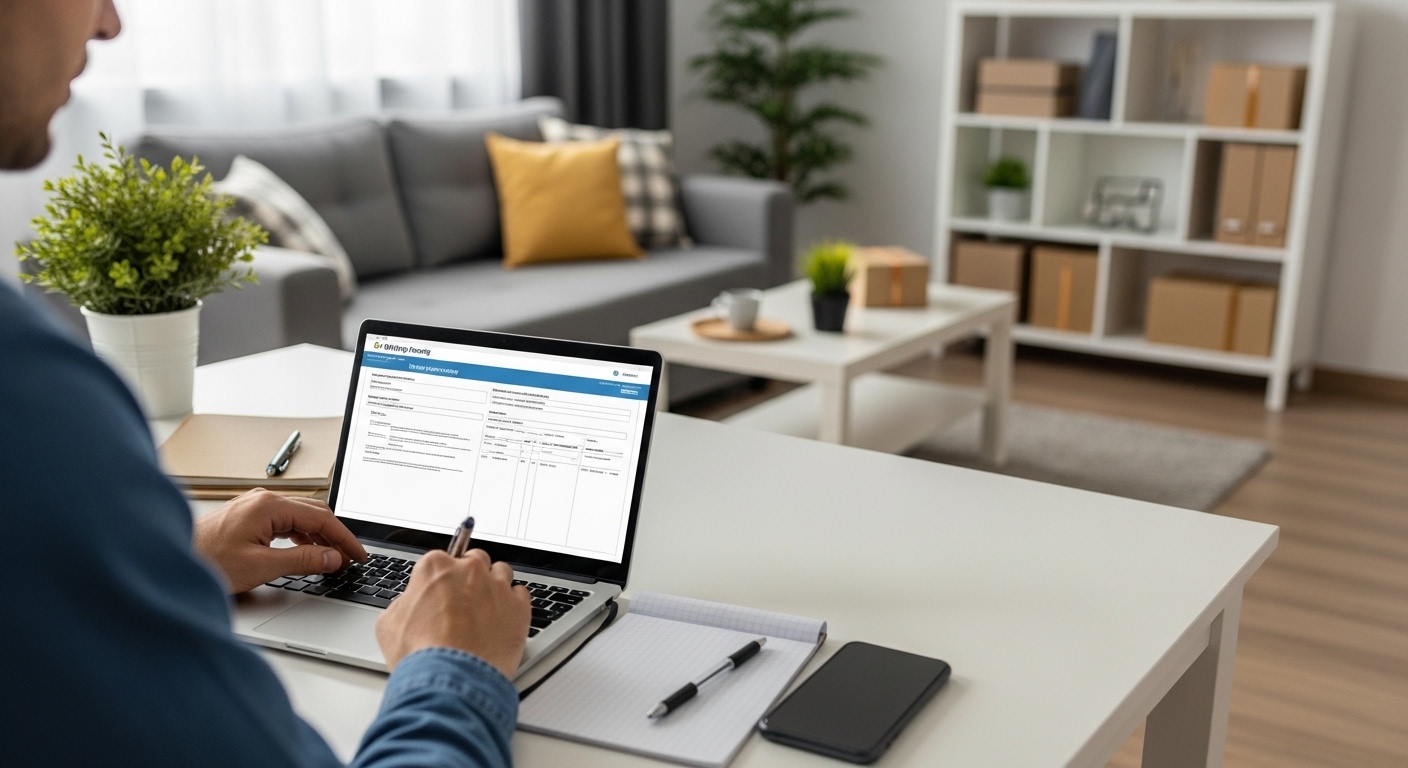
Booking an online freight forwarding service such as DAGO Express is no longer complicated. Here is how to proceed safely:
Determine Dimensions and Weight Precisely
Measure not only the item itself but also the packaging (for example the Euro pallet). Tip: add an extra 2 cm to avoid recalculation charges.
Use an Online Price Calculator
Instead of time-consuming phone calls, use an instant quotation tool. Enter the postcodes and type of cargo – you will immediately see the final price including insurance.
Prepare for Collection
After booking, you will receive the transport documents. Make sure the lorry (often a 7.5-tonne or 12-tonne vehicle) has somewhere suitable to stop and that the goods are ready “kerbside”.
Professionally Managed from Collection to Delivery
Once the order has been placed, the freight forwarder organises collection directly from your location. Special circumstances such as narrow staircases or difficult access roads are taken into consideration. The goods are professionally loaded and secured for transport. During the entire journey they are usually insured. At the destination, delivery and unloading take place on schedule. Additional services such as carrying assistance or delivery notifications can also be arranged if required. This means you remain in control at all times without having to intervene personally.
When Freight Forwarding Is Especially Worthwhile for Private Customers
Beyond a certain point, parcel shipping is simply no longer possible or becomes extremely expensive due to bulky item surcharges.
Tip
Even if your parcel weighs only 20 kg but is very bulky (for example a bicycle), pallet shipping is often the less stressful option.
Weight Limit
Anything above 31.5 kg generally requires freight forwarding.
Girth Measurement
If the sum of 1x length + 2x width + 2x height exceeds approximately 300 cm, postal service providers will usually refuse the shipment.
Fragility
High-quality furniture or inherited items are much safer when secured on a pallet than inside the automated sorting system of a parcel centre.
For international shipping, private customers also benefit from professional customs clearance. Especially for time-sensitive or delicate consignments, the experience of a freight forwarder is a clear advantage. This helps avoid damage and delays.
Costs, Payment and Transparency in Freight Forwarding
The cost of freight forwarding depends on several factors. These include the transport distance, the size and weight of the goods, as well as any additional services. Many freight forwarders offer transparent fixed prices. Payment is usually made either in advance or after delivery. It is important to consider possible additional costs such as customs duties or special handling charges. A reputable quotation will clearly list these points. This ensures private customers always maintain full control over their budget.
Overview: Freight Forwarding Services for Private Customers
What Does Freight Forwarding Cost for Private Customers? Key Pricing Factors
Prices in freight forwarding are dynamic but generally depend on three core factors:
Distance & Postcode Zone
Transport from Hamburg to Berlin is often cheaper than delivery to a remote village in the Bavarian Forest due to zone-based pricing.
Space Requirement
A standard Euro pallet (120x80 cm) is the basic unit. Anything non-stackable occupies more space on the loading area and therefore costs more.
Additional Services
A “delivery notification” (advance phone call before delivery) or collection with a tail lift usually involves a small surcharge (approximately £5–£15).
Example
A washing machine on a pallet within Germany often costs between £60 and £120 depending on the distance.
Packaging Tips: How Private Customers Should Prepare Freight Shipments
In groupage transport systems, your goods may be reloaded up to four times. Here is how to ensure they survive the journey safely:
Label Placement
Attach the consignment note to the side of the wrapping film, not on top. This ensures it remains scannable when stacked.
Obtaining Pallets
Ask at local DIY stores or supermarkets for one-way pallets – these are often available free of charge.
Cardboard & Protection
Use double-walled cardboard boxes. Corners should be reinforced with polystyrene or additional cardboard protectors.
The “Shake Test”
The goods must not move on the pallet. Secure heavy items with tension straps and wrap everything tightly at least three times with stretch film.
Groupage Shipping or Part Load? Choosing the Right Option
There are two common models for private transport:
Part Load Shipping (Direct Transport Option)
Your goods are loaded onto a lorry that still has spare capacity. This is often cheaper and more sustainable because empty runs are avoided. However, it requires flexibility as the driver arrives when they are “passing by”. Perfect for unwrapped furniture transport or bulky bicycles.
Groupage Shipping (Hub Network Transport)
Your goods travel through transhipment depots. This is ideal if you require fixed delivery dates (standard transit time 24–48 hours). The goods must always be secured on a pallet.
Advantages of Freight Forwarding for Private Individuals
Using and booking a freight forwarder offers clear advantages. You save valuable time because planning and execution are handled for you. Your goods remain protected throughout the entire transport process. Convenience is high because you do not have to manage anything yourself. At the same time, you benefit from flexible solutions tailored to your situation. Even complex transports can therefore be carried out stress-free. This is exactly why more and more private customers choose freight forwarding services.
Conclusion: Professional Shipping Also Makes Sense for Private Customers
Freight forwarding is no longer reserved exclusively for businesses. Private customers also benefit from efficient planning, high security and maximum convenience. Whether moving house, transporting furniture or arranging international shipping – professional freight forwarding services make all the difference.
Your Advantage with DAGO Express
We combine the professionalism of B2B logistics with customer service specifically designed to guide private customers through the process.
No contract required: simply book once when needed
Insurance included: basic liability cover under ADSp protects your property
Europe-wide network: deliveries across borders to 38 countries
FAQ
Can I Hire a Freight Forwarder as a Private Individual?
Yes, many modern logistics companies now specialise in private customers and offer simple online booking portals. You simply need to ensure the goods are packed securely for transport and that the lorry can access the delivery address.
Does the Goods Always Need to Be on a Pallet?
In most cases, freight forwarders within groupage networks require the goods to be secured on a Euro pallet or one-way pallet. This allows quick loading using pallet trucks or forklifts and protects the shipment during transport.
What Is a “Delivery Notification” in Freight Forwarding?
A delivery notification is the telephone or digital pre-announcement of delivery by the freight forwarder to the recipient. This is particularly important for private customers to ensure someone is present at the time of delivery.
How Does a Freight Forwarder Calculate Prices for Private Customers?
Prices are primarily based on postcode distance, actual weight and the amount of loading space occupied. Additional services such as a tail lift for unloading in front of the house are usually charged separately.
Does the Freight Forwarder Deliver the Goods into the Property?
By default, freight forwarders deliver “kerbside only”, meaning the driver unloads the goods at the roadside. Additional services such as delivery into the property must be explicitly booked as “two-man handling”.
What Happens if the Goods Are Damaged During Transport?
Every freight shipment is covered by basic liability insurance under the ADSp (General German Freight Forwarders’ Conditions), although liability is often limited by weight. For valuable items, it is therefore recommended to take out additional transport insurance when booking.
How Long Does Domestic Freight Transport Take?
Within Germany, the standard transit time for groupage shipments is usually two to three working days after collection. Express options often allow delivery within 24 hours but involve significant surcharges.
Do I Need to Be Present During Collection?
Either you or a person authorised by you must be present to sign the consignment note and confirm handover. The lorry also requires a suitable place to park safely during loading.
Can I Ship Unpacked Furniture with a Freight Forwarder?
Shipping unpacked furniture is only possible through specialised furniture carriers or part-load providers, as standard groupage freight forwarders require transport-safe packaging. In these cases, the items are usually secured inside the lorry using blankets and straps.
What Are the Maximum Dimensions for a Shipment?
In standard shipping, the maximum length is often 2.40 metres, while the weight per item is usually limited to 1,500 kilograms. Anything exceeding these limits is classified as heavy or special transport and requires an individual quotation.
Courier Service > Blog > Freight Forwarding for Private Customers? Here’s How!
 Dansk
Dansk
 Deutsch
 Eesti
Eesti
 Español
 Français
 Hrvatski
 Italiano
 Latviešu valoda
 Lietuviškai
 Magyar
 Nederlands
 Norsk Bokmål
 Polski
 Português
 Română
 Slovenčina
 Slovenščina
 Suomi
Suomi
 Svenska
 Čeština
 Ελληνικά
 Русский
 Українська
 български
 العربية
 中文 (中国)
 English