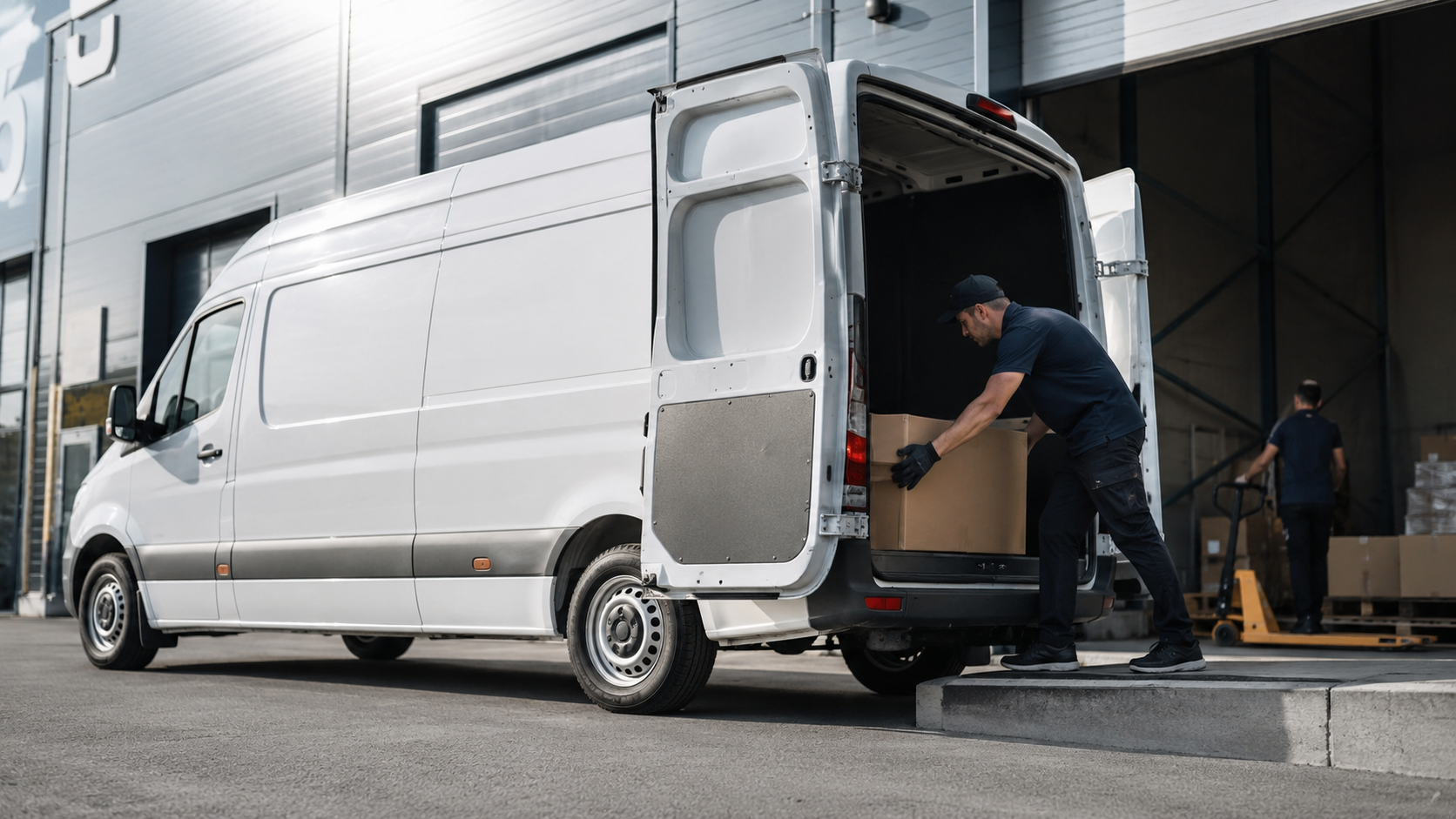
On-Demand Transport: Your Express and Courier Solution for Time-Critical Shipments
An unexpected production stoppage. A spare part that is urgently needed. A contract that must reach its recipient today. Or a sensitive consignment for which delay is not an option. These are the moments that show whether logistics merely delivers “eventually” or performs exactly when required.
On-demand transport is the solution for time-critical shipments when standard logistics is too slow, inflexible or risky. Instead of sending goods through groupage networks, depots and fixed routes, a vehicle is organised specifically for your order. No detours. No transshipment. No unnecessary waiting.
This guide explains how on-demand express and courier services work, when a direct run is worthwhile, which cost factors matter and what to check when choosing a provider.
Key points at a glance
On-demand transport means that a vehicle is provided at short notice specifically for your shipment.
The goods travel directly from collection to destination without transshipment in depots or distribution centres.
Typical applications include spare parts, documents, machine components, exhibition goods, medical consignments and time-critical project logistics.
Depending on location and availability, collection is often possible within 60 to 120 minutes.
Costs depend mainly on distance, vehicle type, shipment size and special requirements.
What is on-demand transport in express and courier services?
On-demand transport is an immediately available solution for urgent consignments. It is driven by your specific need rather than a fixed timetable. As soon as a time-critical delivery arises, a suitable vehicle is organised and dispatched directly to the collection point.
The principle is simple: your shipment is not consolidated with other freight, repeatedly transferred or routed through a conventional groupage network. An exclusively booked vehicle travels directly from A to B. This service is therefore also known as a direct run, dedicated transport, express transport or on-demand courier service.
The key difference from scheduled logistics is the process. Standard shipments often pass through depots, hubs and fixed routes. That is efficient for predictable deliveries but problematic in a genuine emergency. When a component must reach production today or an important document must meet a deadline, every hour matters.
On-demand transport is strongest when speed, predictability and control are more important than the lowest standard tariff.
When is an on-demand courier the right choice?
For a production stoppage, an urgently required spare part or a fixed delivery window, an exclusive direct courier can organise the journey without depot detours.
An on-demand courier is appropriate whenever a normal shipping option would be too slow or too risky. This particularly applies when delays could cause direct costs, project disruption or contractual exposure.
Typical applications include urgent machine parts, last-minute exhibition deliveries, important contracts, sensitive technical components and medical consignments. Automotive, engineering, electrical, medical technology, legal, agency and event businesses regularly use direct runs.
On-demand transport is especially common when the time window is tight. A plant may be stopped, an installation team may be waiting for material or a prototype may need to reach a customer before an appointment. The provider’s response time is just as important as the driving time.
A direct run is also useful for consignments with increased security requirements. With no transshipment, the risk of damage, mix-ups or delays falls considerably. The goods remain in one vehicle and can be tracked during the journey.
In short, on-demand transport is worthwhile whenever the consequential cost of delay exceeds the price of the express solution.
Typical industries and applications
When a laboratory, legal practice or industrial business has to react at short notice, the process used for sensitive sample transport illustrates how a direct, traceable run can be organised.
In engineering, urgent items often include spare parts, tools, control components and assemblies required at a production facility. Just a few hours of downtime can be expensive. A direct run helps shorten outages and restart operations quickly.
The automotive sector relies on tightly timed and just-in-time processes. A missing part can disrupt the entire supply chain. On-demand transport is used for prototypes, production components, tools, test equipment and urgent replenishment.
In medical technology, care is as important as speed. Devices, spares, laboratory supplies and sensitive shipments must be transported reliably and traceably. A dedicated courier reduces interfaces and provides greater control.
Many emergencies in the event and exhibition sector arise at short notice. A display is missing, a technical component has been forgotten or promotional material needs replenishing. On-demand couriers close the gap before a logistics issue becomes a visible project problem.
Law firms, agencies and companies handling confidential documents also benefit. When originals, contracts or tender documents must arrive on time, personal direct delivery is often safer than standard shipping.
The decisive benefits: speed, flexibility and security
Companies that need flexible capacity without maintaining their own fleet can combine direct runs with transport outsourcing for SMEs.
On-demand transport is not an ordinary shipping option. It is an emergency solution for situations in which time and reliability are decisive. Its main benefits are speed, flexibility and security.
Maximum speed: when hours decide thousands of pounds
When production losses or fixed deadlines cannot wait, the comparison of courier prices and self-transport helps assess the value of immediate collection and direct delivery.
The greatest benefit is time saved. On a direct run, only the route between collection and destination matters. There are no depot lead times, sorting processes or unnecessary intermediate stops.
Depending on region and vehicle availability, collection can often take place within 60 to 120 minutes. The courier then drives directly to the recipient, making same-day delivery possible even over longer distances.
This speed can be decisive during production stoppages, installation work or contractual deadlines. The price initially appears higher than standard shipping, but if it saves a project or shortens downtime, a direct run is often the more economical choice.
Complete flexibility: the right vehicle for your shipment
For unplanned failures, missing spare parts or a critical deadline, an emergency courier takes over the immediate direct journey.
Not every shipment needs the same vehicle. An envelope does not require a large van; a Euro pallet will not fit in a car. Machinery or several pallets may require a van, curtain-sided vehicle or even a lorry.
A professional on-demand courier selects the vehicle to match the consignment. Options include cars, small vans, panel vans, sprinter-class vans, box vehicles and lorries. Dimensions, weight, loading method, time window and special requirements determine the choice.
This flexibility makes on-demand transport particularly valuable. You are buying a solution tailored to the task rather than a generic process. Short-notice changes, night or weekend work and international direct runs may also be possible.
Maximum security: no transshipment, less risk
In conventional transport networks, goods are often handled several times: collected, taken to a depot, sorted, loaded, moved onward and delivered again. Every transfer point is a possible source of error.
On a direct run, the shipment stays in the same vehicle. This reduces the risk of damage, loss, confusion or delay and is particularly valuable for sensitive, high-value or confidential consignments.
GPS tracking adds transparency. Customers can see where the vehicle is and when delivery is expected, providing confidence to logistics managers, recipients and internal project teams.
How booking works in three simple steps
A good on-demand transport service should not be complicated. In stressful situations, customers need a clear, quick and understandable process.
Submit an enquiry
First, provide the essential shipment details: collection and delivery addresses, requested collection time, dimensions, weight, type of goods and special requirements. The enquiry can be made by phone, email or online form.
The more precise the information, the faster a realistic quotation can be prepared. Shipment size, loading conditions and time window are particularly important. For sensitive goods, mention handling, insurance or temperature requirements.
Receive a quotation
Your information is used to determine which available vehicle is suitable. You then receive a specific quotation including price, expected collection time and estimated delivery time.
A reputable provider states the price transparently in advance. You know the cost before confirming the order; hidden fees and vague surcharges have no place in time-critical logistics.
Confirm the order and track the shipment
Once approved, the order is confirmed and the vehicle dispatched. The courier travels to collection, accepts the shipment and begins the direct journey to the recipient.
Depending on the provider, the shipment can be monitored by GPS. After delivery, you receive proof such as the recipient’s name, timestamp or digital confirmation.
On-demand transport costs: a transparent overview
When scope, route and time window require broader planning, an express freight provider can organise the shipment as a dedicated urgent transport.
On-demand transport costs depend on several factors, so one universal tariff rarely fits every shipment. The specific order is always decisive.
Distance is the main cost factor. Pricing is often based on loaded kilometres from collection to destination, with vehicle type, shipment size, weight, urgency and additional services also included.
A car courier for documents costs less than a van for pallets. Domestic direct runs differ from international express work. Night, weekend or hazardous-goods transport, two-driver crews and loading aids can also affect the price.
A professional provider supplies a clear fixed price or transparent calculation in advance, allowing you to compare the expense directly with the risk of delay.
Typical pricing factors at a glance
Cost factor
Effect on price
Distance
Longer routes create higher transport costs
Vehicle type
Cars, small vans, sprinters and lorries differ considerably
Shipment size
Dimensions and weight determine the suitable vehicle
Urgency
Night, weekend or public-holiday work may attract surcharges
Special requirements
Dangerous goods, sensitive cargo, additional insurance or special loading
Waiting time
Longer loading or unloading may be charged separately
On-demand versus scheduled networks: a direct comparison
On-demand transport and scheduled networks are not direct competitors; they solve different problems. Scheduled transport suits predictable shipments with normal lead times, while on-demand transport prioritises speed, security and flexibility.
Criterion
On-demand transport
Scheduled network
Speed
Very high; same-day delivery is often possible
Dependent on line-haul schedules and depots
Process
Direct journey from A to B
Transport via handling hubs
Transshipment
No transshipment
Usually several transfers
Security
Very high thanks to the dedicated vehicle
Good, but with more interfaces
Flexibility
Highly flexible and bookable at short notice
Usually tied to fixed processes
Cost
Higher, but predictable and suitable for emergencies
Lower for standard shipping
Suitable for
Urgent transport, emergencies and sensitive consignments
Regular, less time-critical shipments
The decision is not based on price alone. What matters is the cost of delay. When production downtime, contractual penalties or a missed appointment threatens, the faster solution is often the more economical one.
Which vehicle types are available for on-demand transport?
A professional express and courier service operates several vehicle classes so that the solution can be matched precisely to the shipment.
Cars or small vans suit documents, small spare parts and samples. They are quick to deploy, manoeuvrable and ideal for small urgent shipments.
Panel vans and sprinters are commonly used for cartons, larger components or individual pallets and are the flexible standard for many urgent B2B transports.
Bulky goods, several pallets or machine components may require curtain-sided vans, box vehicles or lorries. Loading height, weight, forklift access and loading aids are important.
Vehicle choice should never be left to chance. Accurate dimensions, weight and loading information prevent wasted journeys and lost time.
Security, insurance and tracking
Time-critical transport is not only about speed. The consignment must also arrive safely, traceably and reliably.
A reputable provider should explain transport insurance clearly. Statutory or industry-standard liability terms usually apply, while high-value goods may justify separate cargo insurance.
Tracking is another important signal of trust. GPS data shows the current vehicle location, so customers know not only that the shipment is moving but also when it is expected to arrive.
Proof of delivery should also be provided. Depending on the process, it may be digital and include delivery time, recipient name or confirmation of receipt.
Choosing the right provider: a checklist
Not every courier is suitable for time-critical B2B work. For urgent shipments, assess response capability, transparency and experience as well as price.
A strong provider is easy to reach, asks clear questions and states realistic collection and delivery times. Pricing is explained, suitable vehicle types are available and sensitive or valuable goods are handled professionally.
Provider selection checklist
Question
Why it matters
Is the provider available 24/7?
Emergencies do not keep office hours
Is the response time fast?
Every minute counts in urgent transport
Is a fixed price stated in advance?
Transparency prevents unexpected costs
Is GPS tracking available?
Live visibility provides confidence
Are several vehicle types available?
The solution must match the shipment
Is insurance explained clearly?
Important for valuable or sensitive goods
Is proof of delivery provided?
Documentation is essential for many B2B processes
Does the provider know your industry?
Sector experience reduces errors and follow-up questions
Why on-demand transport is strategically important for companies
Many companies see express transport only as an emergency expense. In reality, it is often a risk-reduction tool because delay, rather than transport itself, creates the largest costs in many industries.
A missing component can stop production, a late delivery can endanger a project and a delayed document may have legal or commercial consequences. Logistics then becomes essential to business continuity.
On-demand transport helps companies remain operational when normal processes are insufficient. It should not be sought only after an emergency escalates; it is sensible to know a dependable express partner in advance.
Frequently asked questions about on-demand transport
How quickly can my shipment be collected?
In many metropolitan areas, collection is possible within 60 to 120 minutes of confirmation. Exact timing depends on location, vehicle availability and class. A reputable provider states a realistic collection time in the quotation.
How are on-demand transport costs calculated?
Costs depend mainly on distance, vehicle type, shipment size and special requirements. Loaded kilometres, vehicle class and additional services are commonly included. Always obtain a transparent fixed price or clear breakdown before ordering.
Is my shipment insured in transit?
Yes. Reputable providers use transport insurance in accordance with applicable statutory or industry terms. Additional cover can be sensible for especially valuable, delicate or sensitive goods; confirm the insured amount before booking.
Which vehicle types are available?
Cars, small vans, panel vans, sprinters, curtain-sided vehicles, box vehicles and lorries may be available. Documents often need only a small courier car, while pallets or machinery require something larger. Selection must reflect dimensions, weight, loading and timing.
Can I track the transport live?
Yes. Many professional on-demand couriers provide GPS tracking. Depending on the provider, you receive a tracking link or regular status updates and can follow the shipment and expected arrival.
Conclusion: when every minute counts, logistics needs a direct solution
On-demand transport is the right choice when standard logistics is not fast, safe or flexible enough. An exclusive direct journey carries the shipment from collection to destination without transshipment, saving time, reducing risk and maximising control.
This option is especially valuable when delay could cause high consequential costs. Whether the shipment is a spare part, document, exhibition item, medical consignment or machine component, a well-organised direct run can shorten downtime, protect deadlines and secure projects.
Choose a provider that responds quickly, prices transparently and communicates reliably. Clear processes, suitable vehicles, insurance and tracking lead to better decisions in time-critical logistics.
 Dansk
Dansk
 Deutsch
 Eesti
Eesti
 English (GB)
 Español
 Français
 Hrvatski
 Italiano
 Latviešu valoda
 Lietuviškai
 Magyar
 Nederlands
 Norsk Bokmål
 Polski
 Português
 Română
 Slovenčina
 Slovenščina
 Suomi
Suomi
 Svenska
 Čeština
 Ελληνικά
 Русский
 Українська
 български
 العربية
 中文 (中国)
 English