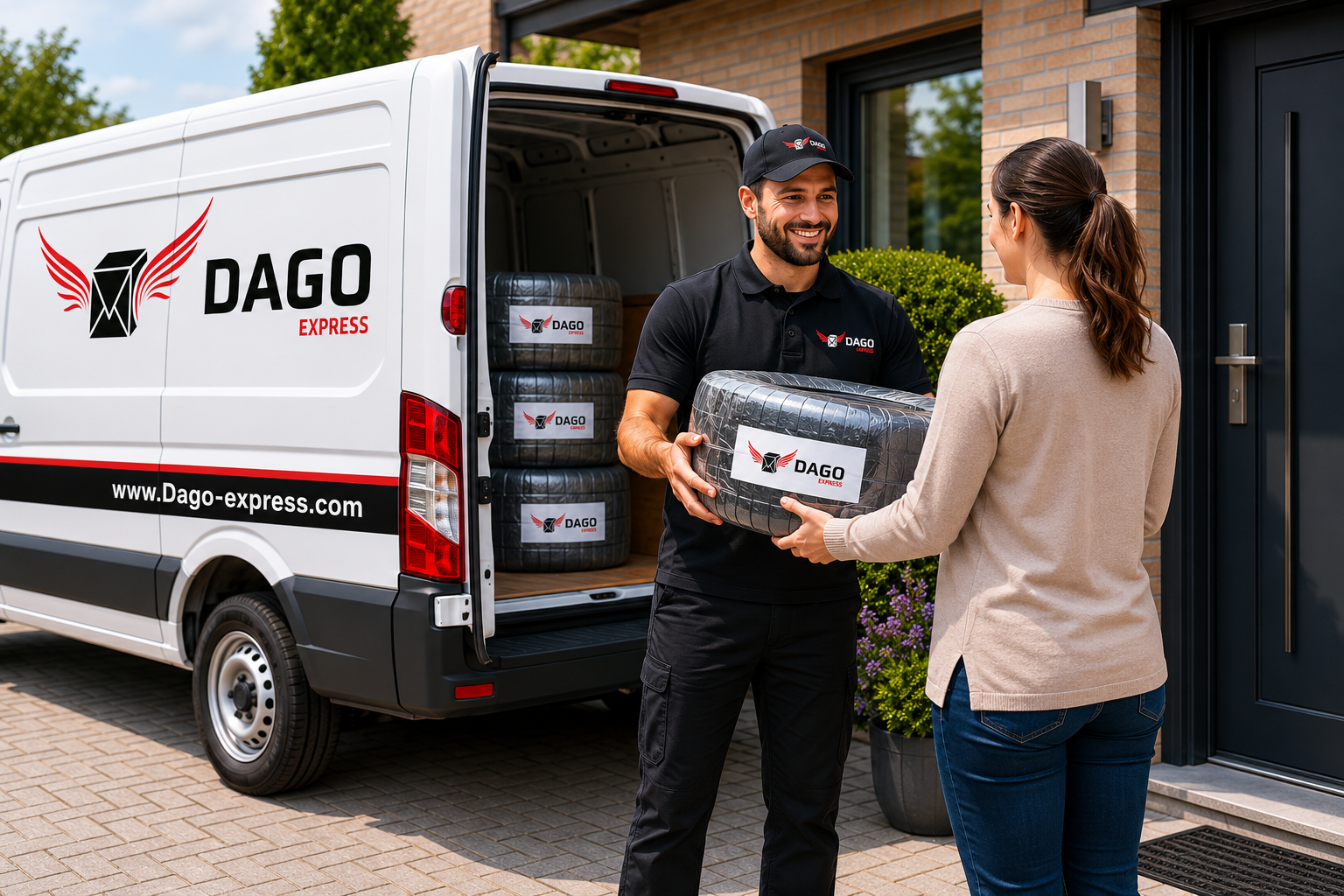
Shipping car tyres often presents logistical challenges for both private individuals and businesses. Whether it’s winter tyres, summer wheels or complete alloy wheel sets – choosing the right courier and preparing the shipment correctly will determine the overall shipping costs. In this guide, you will learn not only how to avoid bulky item surcharges, but also which packaging method is legally safe for complete wheels versus loose tyres. With the right tips, you can save up to €40 per shipment and protect your valuable cargo from transport damage.
The Most Important Things at a Glance
Tyres without rims can usually be shipped without a box – but only if properly wrapped.
Tyres with rims must be packed in sturdy cardboard packaging with padding.
Dimensions and weight: Maximum girth measurement 300 cm, maximum weight usually 40 kg.
The shipping label must be attached securely and clearly visible.
Insurance: Liability cover in case of damage is usually up to €500.
What Should You Consider When Shipping Tyres?
When shipping tyres, it is important to ensure proper packaging, compliance with size and weight limits, and the secure attachment of the shipping label. Insurance conditions and possible bulky item surcharges should also be checked in advance.
Shipping Tyres
Checklist: 3 Steps for Legally Secure Tyre Shipping
Before printing the shipping label, you should complete these steps to ensure you are protected in the event of damage:
Professional Cleaning
Adhesive tape and stretch film do not stick properly to brake dust or tyre care products (silicone). A dry, grease-free surface is essential for the label to adhere securely.
Pressure Adjustment for Complete Wheels
Reduce tyre pressure by approximately 1.0 bar. This helps prevent stress cracks caused by temperature fluctuations in the loading area.
Evidence Documentation (Photo Documentation)
Photograph not only the tyres, but also the DOT number and the rim edges in detail. Additionally, take a photo of the fully packaged parcel including the attached label. This is often the only way the insurer will recognise transport damage as valid.
How to Pack Tyres Safely for Shipping
Correct packaging is essential to avoid damage and ensure smooth transportation.
Cleaning and Drying
Thoroughly clean your tyres of dirt and stones. The tyres must be completely dry before packaging.
Packaging Materials
Obtain sufficient stretch film, adhesive tape and, if necessary, a sturdy cardboard box. For complete wheels (with rims), additional padding around the rims is important to avoid scratches.
Wrapping
Start by wrapping each tyre tightly with stretch film. Make sure the entire tread and sidewalls are covered.
Bundling
To save space and reduce costs, you can bundle two tyres together using stretch film.
Addressing
Attach the shipping label securely and visibly to the tyre tread. Use strong adhesive tape to ensure it does not come loose.
Tyres vs Complete Wheels: The Right Packaging Strategy
The type of packaging determines whether your shipment is classified as a standard parcel or expensive bulky freight.
Tyres Only (Without Rims)
These are considered robust. Wrap each tyre individually in strong stretch film or use special tyre bags. Important: the tread must be fully covered.
Complete Wheels (With Rims)
Maximum protection is required here. Place fitted cardboard discs on the front and back of the rims. Secure them with parcel tape before wrapping the entire wheel in corrugated cardboard or placing it into a square tyre box.
Suitable Packaging for Tyres – How to Do It Properly
Packaging plays a decisive role when shipping tyres. Tyres without rims can often be shipped without a box. However, they must be wrapped in durable, tear-resistant film. Alternatively, protective corrugated cardboard can be wrapped around the circumference. The important point is that the shipping label can be attached securely and visibly.
The situation is different for tyres with rims, as they are significantly more sensitive. A sturdy cardboard box must be used. Foam, bubble wrap or polystyrene should also be used as padding material to prevent scratches and impact damage.
Empty spaces inside the parcel must never remain unfilled. They should be packed with filler material to prevent movement during transport.
Some couriers such as DHL, DPD or Hermes even require special round cardboard protectors for unpackaged tyres. Failure to comply with these requirements may result in additional bulky item charges.
The Shipping Label: Ensuring Your Parcel Arrives Safely
A detached label is one of the most common reasons for parcel loss when shipping tyres. Since rubber and stretch film often contain chemical release agents, normal stickers adhere poorly.
Placement
Always attach the label to the tread (the outer surface), never in the centre of the rim or in recessed areas. The tread offers the flattest surface and is easiest for scanners to read.
Tip
Do not stick the shipping label directly onto the film. Use a layer of wide transparent parcel tape to seal the label all around (“frame” it).
Avoid wrinkles or crooked placement. If the label becomes damaged or unreadable, the parcel cannot be delivered.
Girth Measurement and Weight Limits: Avoid Cost Traps
Every courier has its own limits. Exceeding them by even 1 cm can turn standard shipping into expensive bulky freight.
Courier Comparison
While DHL has strict packaging requirements (square boxes), DAGO Express often allows more flexible collections for heavy or unusually shaped tyre shipments.
The Girth Formula
1 × longest side + 2 × width + 2 × height. The limit is usually 300 cm.
Weight Classes
Be aware that a complete SUV or off-road wheel often weighs more than 25 kg. Many standard parcel services refuse shipments above 31.5 kg.
Hermes divides tyres into parcel classes:
Number of Tyres
Parcel Class
Size Limit (Longest + Shortest Side)
1 Tyre
M
max. 80 cm
2 Tyres
L
max. 120 cm
Anyone ignoring these dimensions risks additional charges or returned shipments.
Professional Tip: Halve Shipping Costs Through Smart Bundling
The most effective way to save money is to bundle two tyres into one package.
Two-Tyre Bundle
Place two tyres without rims flat against each other and secure them tightly together using strong stretch film and parcel tape.
Advantage
You pay for only two parcels instead of four.
Important
The provider’s weight limit (e.g. 40 kg with DAGO Express) must not be exceeded. Heavy alloy wheels usually need to be shipped individually because the combined weight of two wheels often exceeds 50 kg.
Also keep in mind: cardboard boxes and packaging materials are cost factors that should be included in your calculations.
Liability, Insurance and Damage Claims
Standard liability cover under ADSp (German Freight Forwarders’ Standard Terms and Conditions) or parcel services (often up to €500) is frequently insufficient for high-quality alloy wheels.
Obligation to Report Damage
If visible damage to the packaging exists, have it confirmed by the driver or refuse acceptance of the parcel.
Additional Insurance
For complete wheel sets worth more than €1,000, additional insurance should definitely be taken out. It usually costs only a few euros.
Packaging as an Exclusion Criterion
The insurer will only pay if the packaging was “system compliant”. This means: a scratch on a rim will only be reimbursed if the rim was protected by cardboard – stretch film alone is not legally considered sufficient protection against mechanical impact.
Avoid the 3 Most Expensive Mistakes When Shipping Tyres
Label on the Rim
Never stick the shipping label on the rim or on the film covering the hole in the centre. The label must lie flat on the tread so automatic scanners can read it properly.
Bin Bags Instead of Stretch Film
Many people use black rubbish bags. These tear immediately in sorting facilities. Result: the label gets lost and the parcel ends up in lost property. Use industrial stretch film instead.
Missing Rim Protection
A cardboard box around the tyre alone is not enough. Always place a layer of corrugated cardboard directly on the front of the rim before wrapping with film. Otherwise, mechanical impacts may cause deep scratches in the paintwork.
One final tip: do not leave shipping arrangements until the last minute. Thorough preparation saves both stress and money.
Conclusion
Shipping tyres is perfectly manageable with a little planning – but without preparation, it can quickly become an expensive risk. Those who understand the rules regarding packaging, dimensions and liability can save significant money and avoid damage. Compare providers, secure your goods properly, and your shipment will run smoothly.
 Dansk
Dansk
 Deutsch
 Eesti
Eesti
 Español
 Français
 Hrvatski
 Italiano
 Latviešu valoda
 Lietuviškai
 Magyar
 Nederlands
 Norsk Bokmål
 Polski
 Português
 Română
 Slovenčina
 Slovenščina
 Suomi
Suomi
 Svenska
 Čeština
 Ελληνικά
 Русский
 Українська
 български
 العربية
 中文 (中国)
 English