Kerbside Delivery – Meaning, Process and Responsibilities
Kerbside delivery is one of the most common delivery methods used for freight and pallet shipments. It clearly defines where the carrier's responsibility ends and what the recipient must organise independently. This delivery method is particularly common for large, heavy or bulky goods. Anyone unfamiliar with its exact meaning risks delays, additional costs or even damage to the goods.
Key Takeaways
Kerbside delivery means unloading the goods at the pavement or kerbside.
No transportation into the house, building, garden or property is included.
Drivers are generally not permitted to assist with moving the goods beyond the delivery point.
Commonly used for bulky and heavy items.
Responsibility transfers to the recipient once the goods are unloaded.
What Does Kerbside Delivery Mean?
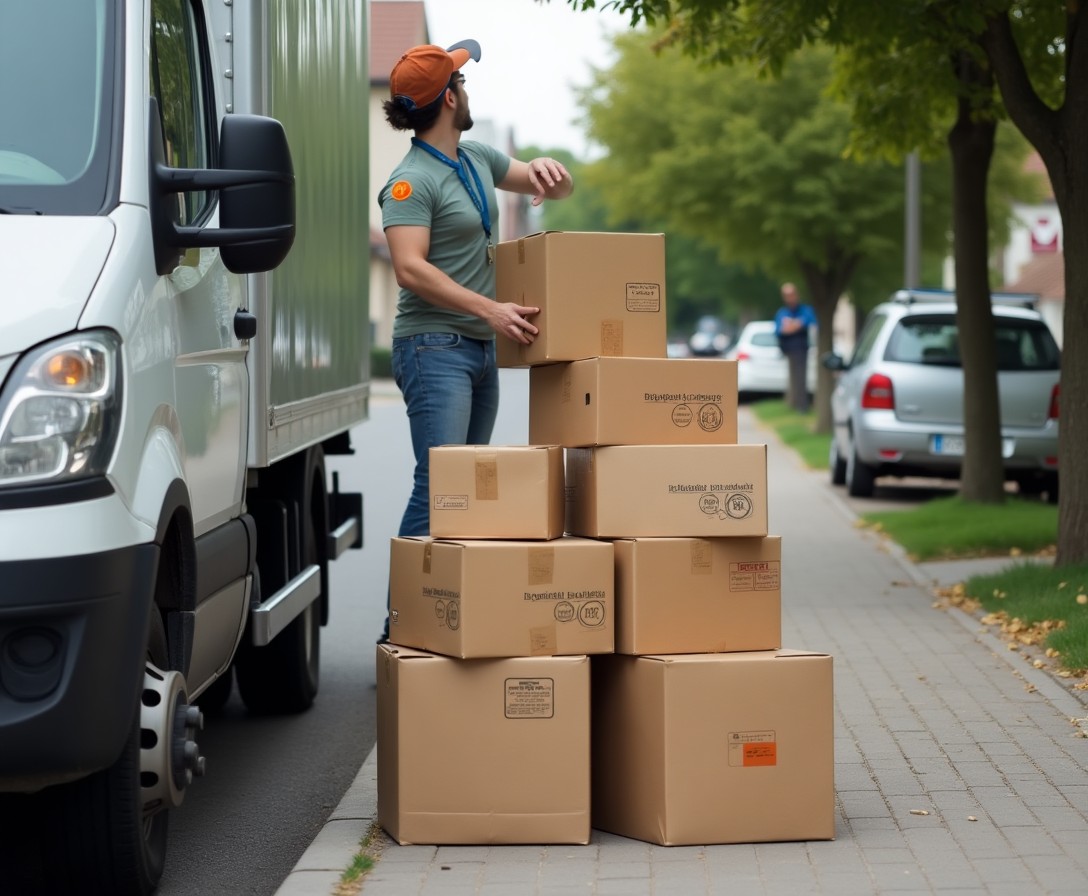
Kerbside delivery means that the carrier delivers the goods only to the kerbside or pavement outside the delivery address. Any further transportation is entirely the responsibility of the recipient.
Meaning of Kerbside Delivery
The term "kerbside delivery" should be interpreted literally. The carrier places the goods at the roadside or directly at the kerb. Transport into a house, flat, office, warehouse or private property is not included in the service. The carrier's responsibility ends precisely at the unloading point.
For example, if you receive a refrigerator via kerbside delivery, you must arrange to move it into the building yourself. This applies regardless of the weight, size or value of the goods. The delivery method is clearly defined and leaves little room for interpretation. This is one reason why it is widely used in freight contracts and helps prevent misunderstandings.
Legal Significance of Kerbside Delivery in the UK
From a legal perspective, kerbside delivery is a well-established delivery arrangement within the UK logistics industry. The driver's contractual obligation is generally fulfilled once the goods have been safely unloaded at an accessible point adjacent to the delivery address.
Drivers are typically not authorised to carry goods into a customer's property unless a specialised delivery service has been purchased. This restriction primarily relates to health and safety regulations, employer liability requirements, insurance coverage and manual handling obligations under UK workplace safety legislation.
If damage occurs while goods are being moved beyond the agreed delivery point, liability can become complicated and may fall outside the carrier's insurance coverage. For this reason, carriers intentionally limit their service to the kerbside.
Transfer of Risk
Once the goods have been unloaded from the vehicle and placed securely on public ground or another agreed delivery point, responsibility for protecting the goods generally transfers to the recipient. Customers should therefore inspect the shipment immediately upon delivery.
Liability Disclaimer
If a driver voluntarily assists in carrying goods into a hallway, home or office outside the agreed service scope, they may be acting beyond their authorised duties. Any resulting damage to the goods, property or personal injury may not be covered by the carrier's insurance.
Important Advice for Recipients
Inspect all goods carefully before signing the delivery note. Any visible damage should be documented immediately and noted on the proof of delivery. Once the shipment has been accepted and the vehicle has departed, proving that damage occurred during transport may become significantly more difficult.
Why Is Kerbside Delivery Used?
The primary reason is efficiency. Delivering goods into a building requires additional time, labour and planning. It also increases the risk of accidents, injuries and property damage.
Kerbside delivery enables drivers to complete deliveries quickly and continue with their schedules. This keeps transportation costs lower. For bulky goods, a full in-home delivery service would be considerably more expensive.
As a result, kerbside delivery is economically beneficial for carriers, retailers and customers alike. In many cases, the cost savings are passed directly to the customer.
Economic Benefits: Why Kerbside Delivery Is the Industry Standard
Kerbside delivery is often considered the backbone of freight logistics due to its efficiency and standardisation.
Predictable Pricing
Because carriers do not need to account for stairs, narrow hallways or extended unloading times, they can offer more competitive and transparent pricing.
Improved Vehicle Utilisation
Drivers can complete more deliveries per route, improving operational efficiency and reducing emissions per shipment.
Greater Transparency
In both business-to-business and consumer deliveries, the clearly defined handover point helps avoid disputes regarding responsibility for moving goods beyond the delivery location.
For private customers, choosing kerbside delivery can often reduce costs by £50 to £200 compared with premium two-person room-of-choice delivery services.
Which Goods Are Delivered Kerbside?
Kerbside delivery is primarily used for large and heavy products that require specialised transportation.
Typical examples include:
Furniture
Refrigerators and freezers
Washing machines and tumble dryers
Large televisions
Home saunas
Building materials
Garden products
Palletised goods
Industrial machinery
Within the B2B sector, kerbside delivery is often the default option for machinery, pallet shipments and large commercial equipment.
What Recipients Must Consider
Someone must be available to receive the delivery. Goods should never be left unattended on a public pavement unless specifically agreed.
The recipient is responsible for organising any necessary assistance, lifting equipment or transport aids required to move the goods.
Timing is also important. Customers who are unprepared may face delays or additional charges.
Weather conditions can create further challenges. Rain, snow and icy surfaces can make handling heavy goods more difficult. Sensitive products such as electronics require additional protection from the elements.
Proper preparation is therefore essential.
Access Requirements for Kerbside Deliveries
Logistics Check: Can a Lorry Reach Your Address?
Kerbside delivery assumes that the delivery location is accessible to a standard freight vehicle.
Parking Restrictions
If parked vehicles prevent safe unloading, the driver may be unable to complete the delivery. Where possible, ensure sufficient space is available outside your property.
Space Requirements
Most freight vehicles require:
A minimum access width of approximately 3 metres
A clearance height of approximately 4 metres
Surface Conditions
The unloading area should be stable and paved. Pallet trucks cannot operate effectively on loose gravel, mud or grass.
Handling of Pallets and Packaging Waste
Many kerbside deliveries arrive on pallets.
An important detail that often causes confusion is that carriers are generally not required to remove packaging materials or pallets as part of a standard kerbside delivery service.
While returnable pallets may occasionally be collected through a pallet exchange system, disposable pallets, shrink wrap and other packaging materials usually remain with the recipient.
The customer is responsible for disposing of these materials in accordance with local waste management regulations. It is advisable to check before ordering whether a packaging removal service can be arranged as an optional extra.
Advantages and Disadvantages of Kerbside Delivery
Advantages
Disadvantages
Lower delivery costs
No insured transportation beyond the kerbside
Highly efficient logistics
Responsibility transfers to the recipient
Faster delivery process
Can be inconvenient in urban areas
Widely available
Additional help may be required
Kerbside Delivery vs Room of Choice Delivery: Which Is Right for You?
Before selecting the cheapest option, consider whether a Room of Choice delivery service may better suit your needs.
Kerbside Delivery
Suitable for:
Tradespeople
Businesses with forklifts or handling equipment
Customers with sufficient assistance available
Room of Choice Delivery
With this service, delivery personnel transport the goods to a designated room inside the property, such as a living room on an upper floor.
This option is often recommended for:
American-style refrigerators
Large wardrobes
Sideboards
Heavy furniture
Premium appliances
Practical Decision Guide
For every additional floor and every 50 kg of weight, at least two strong adults may be required for safe handling. If suitable assistance is unavailable, the additional cost of a premium delivery service may prove worthwhile.
Conclusion
Kerbside delivery is a clear, cost-effective and efficient delivery method. It is particularly suitable for bulky goods and commercial freight shipments.
However, it requires planning and personal responsibility. Customers who arrange assistance, prepare for the delivery window and consider weather conditions can avoid unnecessary complications.
When properly planned, kerbside delivery offers substantial savings while ensuring a smooth and efficient delivery process.
Frequently Asked Questions
What exactly does kerbside delivery mean?
Kerbside delivery means the carrier delivers the goods only to the pavement or kerbside at the specified address. Any further transportation into the property must be arranged by the recipient.
Do I need to be present when the goods are delivered?
Yes. Someone should be present to sign for the delivery and inspect the goods for visible damage before acceptance.
Will the driver carry the goods into my home for an additional fee?
Not usually. Such services generally need to be booked in advance as a specialist in-home or Room of Choice delivery service.
How should I prepare for a kerbside delivery?
Ensure adequate help is available to move heavy items and keep the unloading area clear of obstacles and parked vehicles.
What happens if the road is too narrow for the lorry?
The goods may be unloaded at the nearest location that is legally and safely accessible to the vehicle. You may then need to transport the goods a greater distance yourself.
Do the pallets belong to me after delivery?
Disposable pallets typically become the recipient's responsibility. Returnable pallets may be collected separately or exchanged depending on the carrier's policy.
Am I responsible for protecting the goods from rain?
Yes. Once the goods have been unloaded, responsibility generally transfers to the recipient. Protective coverings should be prepared if poor weather is expected.
Can I refuse delivery if the goods are damaged?
Yes. Significant visible damage should be documented immediately, photographed and noted on the delivery paperwork. In serious cases, you may refuse acceptance.
Does kerbside delivery apply to parcel lockers?
No. Freight shipments are generally too large or heavy for parcel lockers and must be delivered to a physical address.
Is kerbside delivery cheaper?
Yes. It is usually the most economical freight delivery option because it requires less time, labour and equipment. However, customers must arrange the final transportation themselves.
Courier Service > Blog > Kerbside Delivery – Meaning, Process and Responsibilities
 Dansk
Dansk
 Deutsch
 Eesti
Eesti
 English (GB)
 Español
 Français
 Hrvatski
 Italiano
 Latviešu valoda
 Lietuviškai
 Magyar
 Nederlands
 Norsk Bokmål
 Polski
 Português
 Română
 Slovenčina
 Slovenščina
 Suomi
Suomi
 Svenska
 Čeština
 Ελληνικά
 Русский
 Українська
 български
 العربية
 中文 (中国)
 English