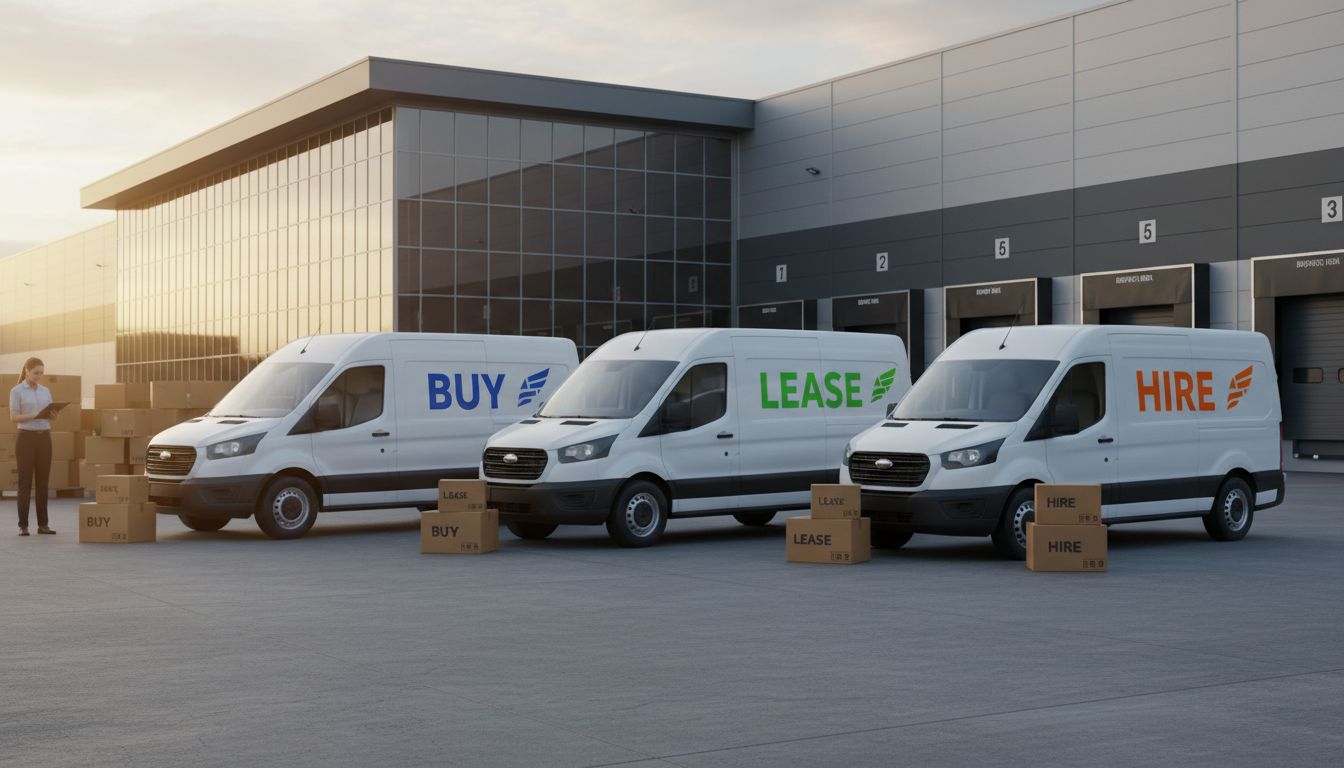
Should you buy, lease or hire a courier van? This question is one of the most important decisions you will make when starting or growing a courier business. Your van is not just a vehicle. It is the backbone of your daily work and your income. Each option – buying, leasing or hiring – comes with different costs, risks and levels of flexibility. This guide explains all three choices in detail and helps you decide which option best fits your budget, workload and long-term plans.
The most important points at a glance
Buying a courier van offers full ownership and no mileage limits
Leasing provides predictable monthly costs with some restrictions
Hiring a courier van gives maximum flexibility but higher long-term costs
Many couriers start by hiring, then move to leasing, and later buy
The right option depends on budget, workload and future plans
Should you buy, lease or hire a courier van?
The best option depends on how long you plan to work as a courier, your budget and how much flexibility you need. Buying is cheapest long term, leasing offers fixed costs, and hiring is best for short-term or low-risk starts.
Buying a courier van as a long-term investment
Buying a courier van is the most straightforward option and gives you full control over your vehicle. You are not tied to contracts or rental terms. You can drive as many miles as you want, which is ideal if you plan to work long hours or cover large distances. This freedom allows you to maximise your earning potential without worrying about extra charges.
Another major advantage is ownership. You can sell the van later and recover part of your investment. If the vehicle is well maintained, resale value can be significant. You also avoid ongoing monthly payments, which are usually more expensive over time than ownership. However, buying a van requires a high upfront investment, especially for newer models. You must also budget for servicing, maintenance and unexpected repairs. Depreciation is another factor, as the van will lose value over time. Despite these drawbacks, buying is often the most cost-effective choice for couriers who plan to stay in the industry long term.
Leasing a courier van with fixed monthly costs
Leasing a courier van offers a balance between buying and hiring. You get access to a reliable vehicle without paying a large amount upfront. Instead, you pay a fixed monthly fee for a contract period, usually between two and five years. This makes budgeting much easier and helps manage cash flow. Many leasing agreements include road tax, and some also cover maintenance. This reduces the risk of unexpected repair bills. Predictable costs are especially helpful for growing courier businesses. However, leasing comes with limitations. Most contracts include mileage caps. If you exceed them, extra charges apply. This can be challenging if your workload varies or increases during busy seasons. Leasing contracts also lock you in for a set period. Ending the agreement early often results in high cancellation fees. At the end of the lease, you do not own the van unless you choose a lease-to-buy option.
Hiring a courier van for maximum flexibility
Hiring a courier van is the most flexible option available. It is ideal for new drivers, short-term projects or testing the courier market. You can hire a van only when you need it, without long-term commitment. One of the biggest benefits of hiring is convenience. Rental agreements usually include servicing, maintenance and breakdown cover. If something goes wrong, the rental company handles it. This makes hiring a stress-free solution, especially for beginners.
The main drawback is cost. Daily or weekly rental fees add up quickly. Over time, hiring is far more expensive than buying or leasing. You also build no equity, as the vehicle never belongs to you. Availability can also be an issue, especially during peak periods when demand for rental vans is high.
Cost, flexibility and commitment compared
Option
Upfront cost
Monthly cost
Mileage limits
Maintenance
Ownership
Buy
High
Low
None
Self-funded
Yes
Lease
Low
Fixed
Usually yes
Often included
No
Hire
Very low
High
Varies
Included
No
Which option suits your courier business best?
The best choice depends on your business goals and financial situation. Buying suits couriers who want full control and plan to work long term. It removes mileage restrictions and monthly payments but requires capital and responsibility.
Leasing works well for drivers who want predictable costs and newer vehicles without large upfront spending. It is less flexible than hiring but more stable.
Hiring is ideal for short-term needs or low-risk entry into the industry. Many successful couriers follow a natural progression. They start by hiring, move to leasing as their workload grows, and eventually buy once their business is established.
Why choosing the right van is a business investment
Your courier van determines the type of work you can accept and how efficiently you operate. Specialist services such as dangerous goods transport or chilled deliveries require additional equipment and certifications. These costs should be considered alongside your vehicle choice. Thinking long term is essential. The right decision today can reduce costs, improve reliability and support business growth in the future. Choosing wisely helps build a stable and profitable courier operation.
Conclusion
Buying, leasing or hiring a courier van each has clear advantages and disadvantages. Short-term flexibility favours hiring, predictable budgeting points to leasing, and long-term savings come from buying. The right choice depends on your workload, finances and future plans. A well-chosen van is not just transport. It is the foundation of your courier business success.
 Dansk
Dansk
 Deutsch
 Eesti
Eesti
 English (GB)
 Español
 Français
 Hrvatski
 Italiano
 Latviešu valoda
 Lietuviškai
 Magyar
 Nederlands
 Norsk Bokmål
 Polski
 Português
 Română
 Slovenčina
 Slovenščina
 Suomi
Suomi
 Svenska
 Čeština
 Ελληνικά
 Русский
 Українська
 български
 العربية
 中文 (中国)
 English