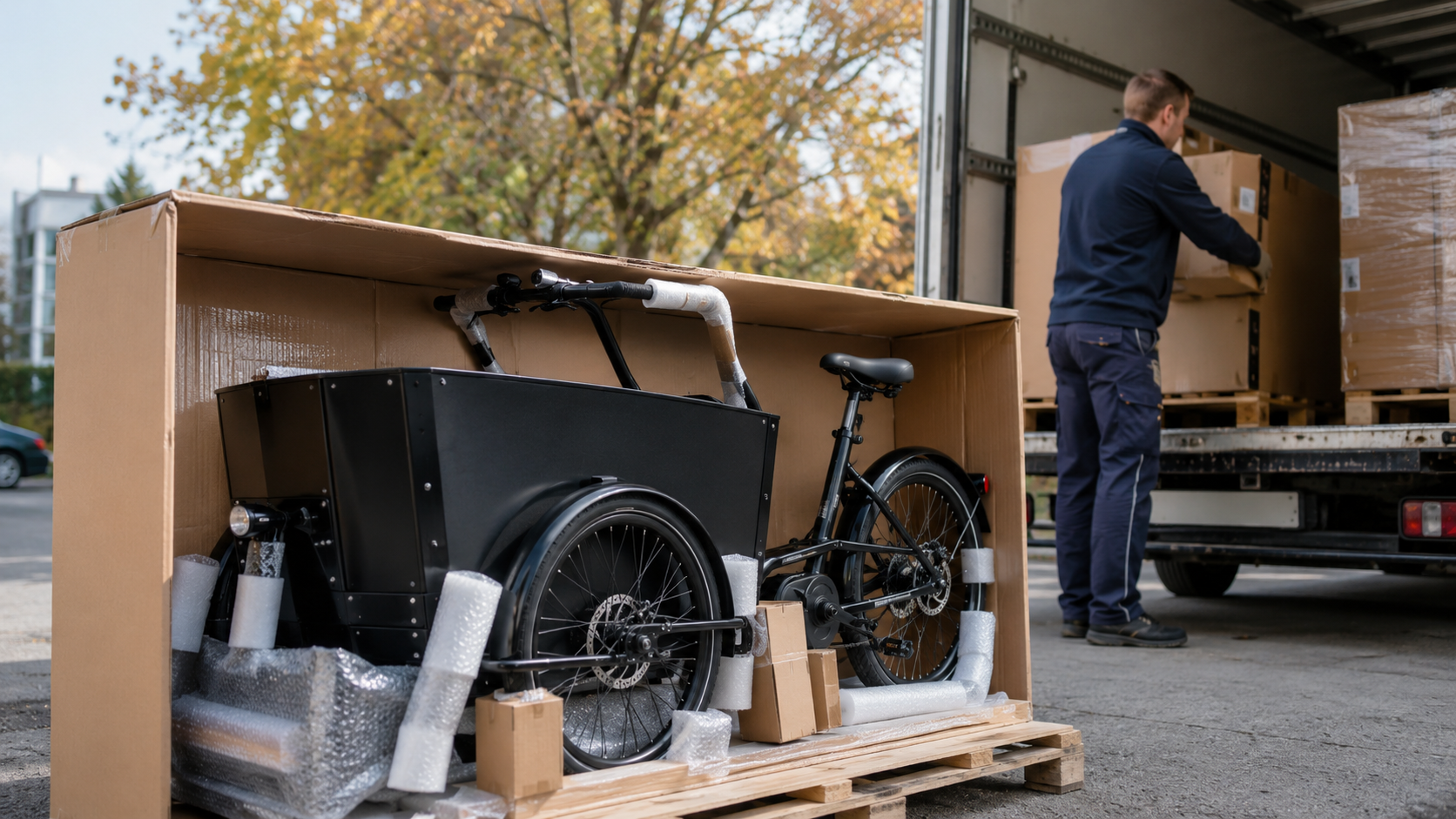
Shipping a cargo bike requires more planning than sending a standard bicycle. Due to their size and weight, cargo bikes are usually unsuitable for standard parcel services. Instead, freight forwarding companies are typically required. Packaging is also more complex, as sensitive components must be protected and in some cases removed before transport. If you want to ship an electric cargo bike, additional dangerous goods regulations apply because of the lithium battery. To avoid problems during transport, it is essential to consider every step carefully – from packaging to final delivery.
Key Takeaways
- Freight forwarding is essential: Cargo bikes are generally too large and heavy for standard parcel services.
- Careful packaging prevents damage: Remove sensitive parts and use sufficient padding.
- Check dimensions and weight: Not every carrier accepts oversized cargo bikes.
- E-cargo bike batteries are classified as dangerous goods: Shipping must comply with UN3171 regulations.
- Inspect the delivery immediately: Document any damage directly upon arrival.
What Should You Consider When Shipping a Cargo Bike?
When shipping a cargo bike, it is important to choose a suitable freight forwarding company, package the bike securely, comply with size and weight restrictions, and follow specific battery transport regulations for electric cargo bikes.
>> Calculate your shipping price online in just 1 minute and book your transport now <<
Freight Forwarding Instead of Standard Parcel Services
Cargo bikes are often too bulky and heavy for traditional parcel delivery services. Standard carriers such as DHL or Hermes typically have limits regarding dimensions and maximum weight. Once a shipment exceeds these restrictions, freight forwarding becomes necessary. Freight companies specialise in transporting large and heavy goods and have the required logistics infrastructure.
Reliable freight forwarders usually arrange a fixed collection and delivery date in advance, often by telephone or email. This provides planning security for both sender and recipient. Not every local freight company has experience with bicycle or cargo bike transport, so comparing providers is worthwhile. Pay close attention to their experience, insurance coverage, pricing structure, and transport protection methods.
Proper Packaging Protects Against Transport Damage
A sturdy and shock-resistant packaging solution is essential when shipping a cargo bike. Large cardboard bike boxes or custom-made transport packaging are ideal. Bubble wrap, foam padding, and reinforced cardboard help protect the frame and sensitive components from impact damage.
Delicate parts such as pedals, handlebars, saddles, mirrors, or baskets should ideally be removed, wrapped separately, and securely attached to the frame inside the packaging. Empty spaces inside the box should never remain unfilled. Use packing paper, foam inserts, or crumpled paper to stabilise the bike during transport.
For especially heavy cargo bikes, pallet shipping is often the safest option. In this case, the bike is secured to a pallet using straps or cable ties and wrapped with stretch film. Shipping a cargo bike without packaging should always be avoided, as insurance coverage may otherwise become invalid in the event of damage.
Dimensions, Weight, and Battery Regulations
Cargo bikes frequently exceed standard shipping dimensions. Before booking transport, carefully check the exact specifications required by the freight forwarding company. Important measurements include length, width, height, and total weight. Many providers offer online calculators to determine shipping eligibility and estimated costs.
For electric cargo bikes, battery transport regulations are especially important. Lithium-ion batteries are classified as dangerous goods under UN3171 regulations. Freight carriers may request safety data sheets and battery test summaries before accepting the shipment.
Some carriers require batteries to be transported separately in certified hazardous goods packaging, while others may refuse transport entirely. Clarify these conditions in advance to avoid delays or additional charges. If possible, remove the battery and ship it separately through a certified dangerous goods carrier.
Preparing the Cargo Bike for Collection
Proper preparation ensures a smooth handover to the freight company. Arrange a fixed collection date and make sure the cargo bike is fully prepared before pickup. This includes both packaging and clear labelling.
The shipping label should be attached visibly, ideally on the front side of the pallet or box. It is highly recommended to photograph the fully packaged cargo bike from every angle before transport. These photos can serve as valuable evidence if transport damage occurs.
If the bike is shipped on a pallet, ensure there is easy ground-level access or a loading ramp available for collection. Delays during pickup can often result in additional charges, so careful planning helps avoid unnecessary costs.
Always Inspect the Cargo Bike Upon Delivery
The shipping process does not end when the cargo bike leaves your property. A careful inspection upon delivery is equally important. Examine both the packaging and the cargo bike immediately for visible signs of damage such as dents, tears, crushed cardboard, or scratches.
If any damage is visible, inform the driver immediately and ensure it is documented on the delivery note. Without written confirmation at the time of delivery, later claims may become difficult or impossible.
Ideally, open the packaging while the driver is still present. Photograph all visible damage thoroughly and contact the freight company or your insurance provider as soon as possible. Even if the outer packaging appears intact, inspect the cargo bike carefully, as hidden transport damage may not be immediately obvious.
How to Dismantle a Cargo Bike for Transport
To reduce logistics costs and minimise the risk of damage, proper dismantling is strongly recommended before shipping a cargo bike. Start by removing all detachable components such as the cargo box, handlebars, pedals, baskets, or accessories.
These components should be packaged separately but ideally remain within the same shipment. Reducing the bike’s total dimensions can lower freight costs significantly, as many carriers calculate prices based on volume or oversized freight classifications.
Before dismantling, document the condition of the cargo bike with photographs. Keep all screws, bolts, and small components safely stored so the recipient can easily reassemble the bike after delivery.
Insurance Coverage When Shipping a Cargo Bike
Cargo bikes, especially electric models, often represent a considerable financial investment. For this reason, adequate transport insurance is essential. Standard shipping insurance may only cover limited values, while premium cargo bikes often require additional coverage.
Always verify the maximum insured value before shipping. Lithium-ion batteries also influence insurance conditions because they are classified as dangerous goods. Some insurers or freight providers may require separate declarations or specialised handling procedures for batteries.
Transport Dimensions and Weight Influence Shipping Costs
Shipping costs for cargo bikes are largely determined by the bike’s dimensions and total weight. Because cargo bikes frequently exceed the maximum size limits for standard parcel services, they are generally classified as freight shipments.
Measure the fully packaged bike accurately after dismantling removable parts. Freight carriers often calculate prices based on volumetric weight, meaning a more compact package can significantly reduce costs. Always check the maximum permitted dimensions with the chosen freight provider before booking transport.
Additional Tips for Smooth Cargo Bike Shipping
Several additional precautions can help avoid common shipping mistakes. Never ship a cargo bike without protective packaging, even for short distances. Insufficient protection increases the risk of damage and may invalidate insurance claims.
Compare several freight forwarding companies regarding price, service quality, experience, and collection flexibility. Transparent communication and clear documentation procedures are strong indicators of a reliable provider.
Photograph the cargo bike thoroughly before shipping to document its condition. If the bike is used, a basic cleaning before packaging is also recommended. A clean bike simplifies inspection upon delivery and creates a more professional impression.
Finally, inform the recipient early about the planned delivery timeframe. This helps prevent missed deliveries, delays, and additional storage or return costs.
Conclusion: Safe Cargo Bike Shipping Requires Preparation
Shipping a cargo bike involves more effort than standard bicycle transport, but with careful planning, the process can be completed safely and efficiently. Choose an experienced freight forwarding company, use secure packaging, verify dimensions carefully, and follow all regulations regarding electric bike batteries.
Thorough preparation, proper documentation, and careful inspection upon delivery ensure a stress-free shipping experience for both sender and recipient.
 Dansk
Dansk
 Deutsch
 Eesti
Eesti
 English (GB)
 Español
 Français
 Hrvatski
 Italiano
 Latviešu valoda
 Lietuviškai
 Magyar
 Nederlands
 Norsk Bokmål
 Polski
 Português
 Română
 Slovenčina
 Slovenščina
 Suomi
Suomi
 Svenska
 Čeština
 Ελληνικά
 Русский
 Українська
 български
 العربية
 中文 (中国)
 English