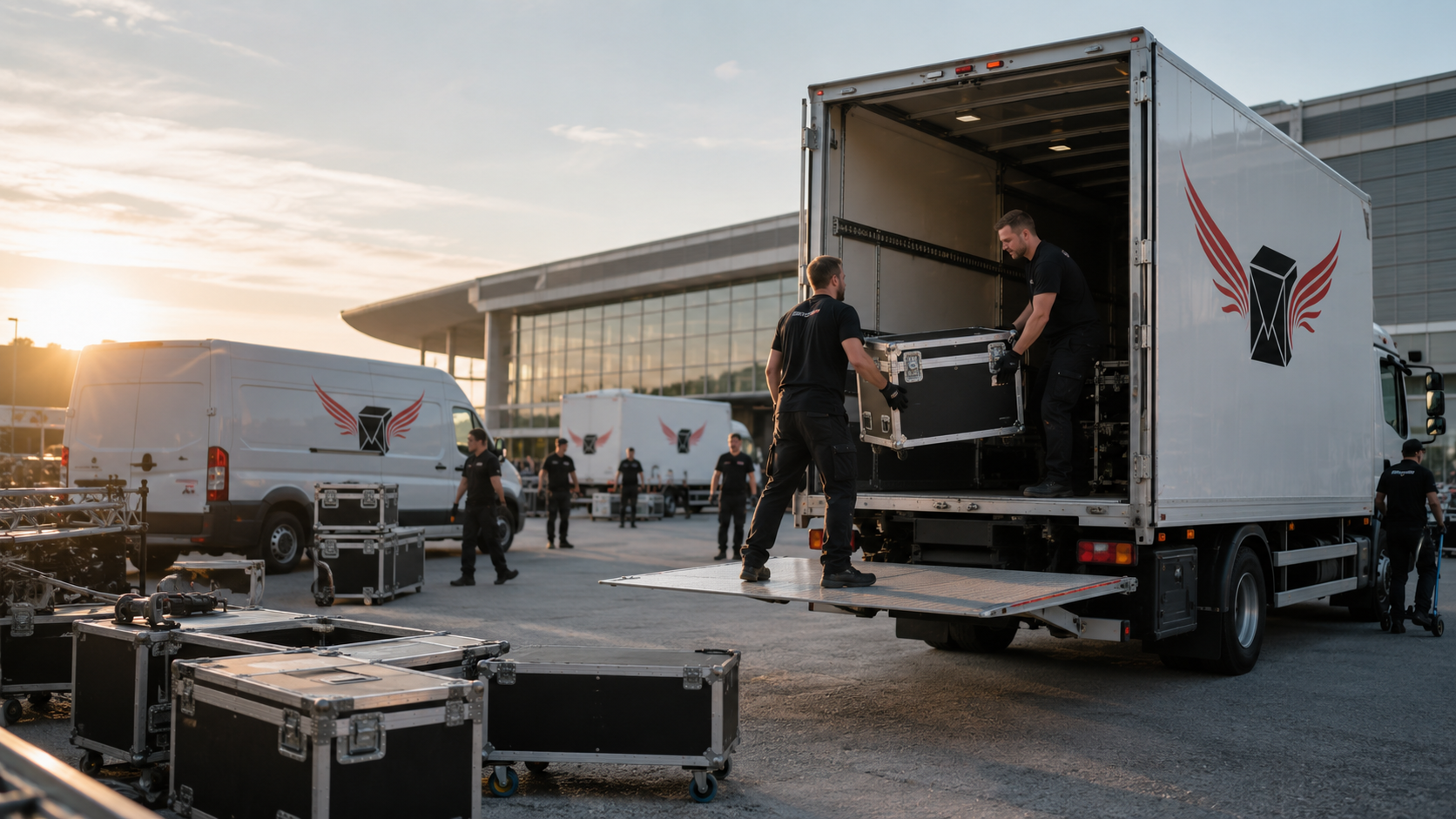
A well-thought-out checklist for event transport and logistics is crucial for the success of any event. Without clear planning, you risk delays, damage, or unnecessary costs. This guide covers all the relevant steps – from initial planning to the post-event review. The focus is on structure, communication, and safety, enabling you to manage even complex events efficiently while minimising risks. A systematic approach saves time, money, and stress.
In a nutshell
- A clear definition of the event's scope, items for transport, and timeframes is the foundation of all planning.
- Detailed route and transport planning prevents delays and bottlenecks.
- Effective communication between all parties ensures a smooth operation.
- Safety protocols and contingency plans protect against disruptions and damage.
- A thorough post-event review helps to improve future events.
>> Get your event logistics quote in under 1 minute
What should a checklist for event transport and logistics include?
A comprehensive checklist covers planning, transport coordination, time management, safety protocols, on-site execution, and the post-event review. The goal is to ensure a seamless process without delays or damage.
Defining your event's objective, scope, and cargo
The process begins with a clear definition of the event. You need to establish whether it's a trade fair, a concert, or a corporate function, as this classification determines the entire logistical effort. Next, list all the items that need to be transported. This includes technical equipment, furniture, catering supplies, decorations, and promotional materials.
Vehicles and storage facilities must also be considered. Quantities, dimensions, and weights play a key role, as they influence the choice of transport. Priorities are equally important; critical items must be available first. At the same time, you'll need to define time windows for set-up, the event itself, and dismantling. Only with this foundation can a robust logistics structure be developed.
Strategic planning for transport requirements and routes
Meticulous transport planning starts with complete data. Collection and delivery locations must be precisely documented. This is followed by a route analysis, where you'll check journey times, traffic conditions, and potential bottlenecks. Access routes to the venue are particularly important and must be agreed with all stakeholders in advance.
Loading and unloading zones should also be clearly defined, as a lack of coordination often leads to delays. It's also wise to plan for additional journeys. Return trips and empty container logistics are frequently underestimated. A flexible plan prevents bottlenecks, ensuring the operation remains stable even when things change.
Scheduling and coordinating all stakeholders
A realistic schedule is vital for success. It's essential to include buffer times for traffic jams or waiting periods. Without these reserves, the schedule can quickly fall apart. Deliveries must be timed to allow for set-up and technical checks to begin on schedule. The dismantling phase also requires its own plan. Critical milestones should be documented in writing.
This information must be shared with everyone involved. At the same time, clear coordination is necessary. Appoint a main point of contact for each area, including the event organiser, the transport company, the technical team, and the caterers. Communication channels must be unambiguous, and escalation procedures should also be defined. Pre-event briefings help to avoid misunderstandings.
Arranging vehicles, permits, and security
Choosing the right vehicles is a central part of the process. Depending on the event, you may need vans, lorries, or specialised vehicles. Refrigerated vehicles are indispensable for catering. The cargo must be securely fastened to prevent damage. Packaging and labelling are also important; fragile goods must be transported separately. Furthermore, all vehicles must be checked to ensure they have no weaknesses in terms of maintenance, fuel level, or technical condition.
In parallel, you'll need to secure any necessary permits. Clarify access rights, parking regulations, and restricted hours. Weight restrictions may also apply. Insurance policies protect against financial risks. For international events, customs regulations must also be taken into account.
On-site execution and management during the event
The on-site phase is where your planning is put to the test: marshals and the loading crew must be ready. Clear signage makes navigation easier, saving time, especially during manoeuvring. A check-in system provides an overview, with all deliveries documented. Any damage or missing items can be identified immediately. Constant monitoring is necessary throughout the event.
Status updates provide an overview of progress. Bottlenecks affecting equipment, personnel, or materials must be identified early. Spontaneous extra journeys should only be undertaken in a controlled manner. Every deviation is documented, allowing problems to be analysed later. This transparency significantly increases efficiency.
Optimising dismantling, return transport, and post-event review
After the event comes the next critical phase. The breakdown must be carried out in a structured manner. Sensitive equipment is secured first, followed by the rest of the inventory. Empty containers and reusable materials must be counted. Cables and devices are also checked. Return deliveries must be coordinated, and suppliers should be given clear instructions. After dismantling, the venue is inspected, and any damage or missing materials are documented.
This is followed by an evaluation. Transport times and costs are analysed, and any delays are assessed. Feedback from all stakeholders is particularly valuable and leads to concrete improvements. The checklist is then updated accordingly.
An unusual but crucial perspective
An often-overlooked factor is the psychological strain on the event team. Stress caused by time pressure and unclear communication leads to mistakes. Therefore, a clearly structured process with fixed responsibilities is worthwhile. Digital tools for real-time communication reduce misunderstandings. Short decision-making paths are equally important. Teams that are mentally supported work more efficiently. This aspect is rarely considered in classic checklists but is crucial for success.
Conclusion
A professional checklist for event transport and logistics isn't a luxury; it's a necessity. It combines planning, safety, and efficiency. By working in a structured way, you can avoid mistakes and reduce costs. Clear communication and realistic scheduling are particularly crucial. The post-event review should not be overlooked, as it ensures long-term improvements. With the right strategy, event logistics become predictable and controllable. That's what makes the difference between chaos and a perfectly executed event.
 Dansk
Dansk
 Deutsch
 Eesti
Eesti
 English (GB)
 Español
 Français
 Hrvatski
 Italiano
 Latviešu valoda
 Lietuviškai
 Magyar
 Nederlands
 Norsk Bokmål
 Polski
 Português
 Română
 Slovenčina
 Slovenščina
 Suomi
Suomi
 Svenska
 Čeština
 Ελληνικά
 Русский
 Українська
 български
 العربية
 中文 (中国)
 English