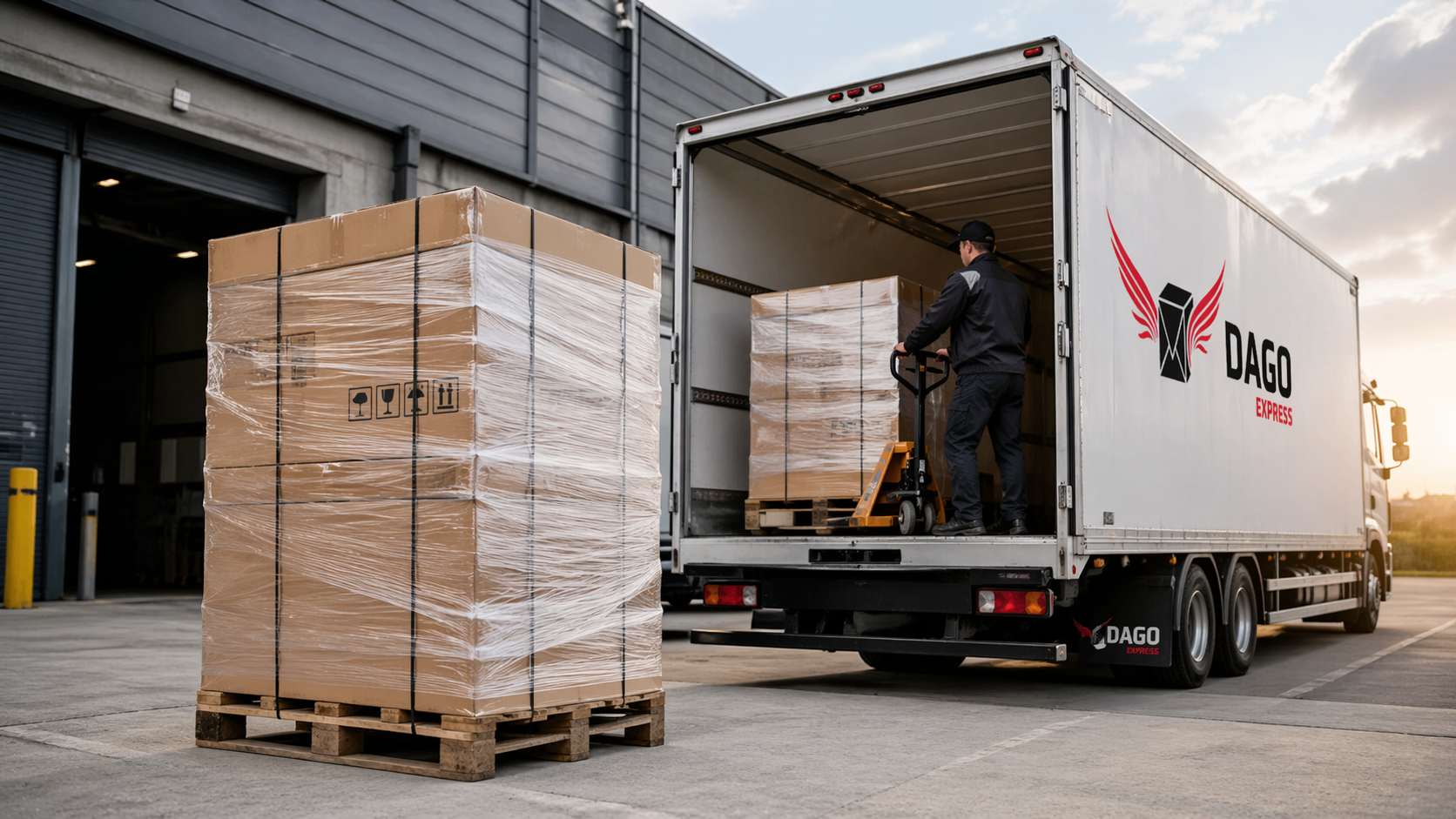
Faster Delivery: How to Prepare Your Goods Perfectly for Direct Transport
Time-critical transports require maximum precision. In direct transport, every minute counts because there is no reloading and no second chance to fix mistakes. Errors in packaging, documentation, or labeling have an immediate impact. Proper preparation ensures your goods arrive quickly, safely, and without unnecessary delays. At the same time, it reduces coordination efforts significantly. This guide shows in practical terms what really matters to ensure your shipment reaches its destination efficiently and without complications.
Key Takeaways
Direct transport requires independently stable packaging without external support
Complete documentation prevents delays and follow-up questions
Clear labeling is essential for smooth delivery
Access and unloading conditions must be checked in advance
Good preparation saves time, costs, and reduces risks
Packaging Determines Transport Safety
Packaging is the most critical factor in direct transport. Unlike groupage freight, there is no stabilizing effect from surrounding shipments. Therefore, each load must stand securely on its own. Many companies underestimate this and rely on standard packaging. This often leads to damage during transport.
A stable pallet forms the foundation of a secure shipment. Damaged load carriers significantly increase risk. The packaging must also be form-fitting to prevent movement. Additional securing methods such as stretch wrap or strapping are essential. Heavy goods should include lashing points. Only then will the load remain stable even during emergency braking.
Overview: Key Packaging Factors
Factor
Importance
Pallet quality
Prevents instability
Form-fit packaging
Minimizes movement
Stretch wrapping
Secures loose elements
Strapping
Increases overall stability
Anti-slip mats
Prevent sliding
Independent Stability Instead of Groupage Effect
In groupage transport, shipments often stabilize each other. This effect does not exist in direct transport. Each shipment must be fully stable on its own. This is especially important for machinery or bulky goods. Without proper securing, items can tip or shift.
Anti-slip materials should always be used. Weight distribution also plays a crucial role. Uneven loads can affect vehicle stability. Drivers must then adjust their driving, which slows down delivery. A well-balanced load reduces this risk significantly. Proper preparation speeds up the entire transport process.
Complete Documentation Saves Time
Documentation is often underestimated in direct transport. Missing paperwork causes immediate delays. The driver cannot wait or improvise. Therefore, all documents must be prepared in advance. These include the consignment note, delivery note, and customs papers if needed. Additional documents such as hazardous goods declarations may also be required.
All paperwork must be fully completed and accurate. Illegible or incomplete documents lead to delays. Ideally, all documents are handed over together. This allows the driver to depart immediately. Proper documentation significantly reduces communication efforts.
Clear Labeling Ensures Smooth Processes
Clear labeling is essential for fast delivery. Unclear or missing labels are a common cause of delays. In direct transport, there are no hubs to clarify issues. Therefore, all information must be instantly visible. Sender and recipient details must be complete.
The delivery address must be precise. Details such as hall, gate, or ramp numbers are critical. A contact person should also be included. A mobile number helps with coordination on-site. Labels should be large and easy to read. They must also be weather-resistant. Applying labels on multiple sides increases reliability.
Access and Unloading Must Be Planned
One of the most common issues occurs at the delivery location. Many focus only on the transport itself. However, problems often arise during delivery. If access is not suitable, the driver cannot complete delivery. This leads to costly additional trips.
Therefore, the vehicle type must be considered. Large trucks require sufficient space. Height and weight restrictions must be checked. It is also important to ensure loading zones are accessible. Unloading equipment must be clarified in advance. Not every recipient has a forklift or ramp. These details must be confirmed beforehand to avoid delays.
The Overlooked Success Factor: Communication
Communication is often underestimated but crucial. Clear coordination ensures a smooth process. The driver should receive all relevant information in advance. This includes delivery times, contacts, and special requirements.
Last-minute changes must be communicated immediately. Digital tools can help, but direct communication remains key. Misunderstandings quickly lead to delays. This is especially critical for urgent shipments. Structured communication improves efficiency. Companies that focus on this benefit long-term. Good communication saves both time and money.
Conclusion
A direct transport is only as efficient as its preparation. Companies that optimize packaging, documentation, labeling, and delivery conditions avoid costly mistakes. Independent load stability is especially critical. At the same time, clear communication reduces coordination efforts. Businesses that master these factors benefit from faster delivery times and lower costs. Ultimately, preparation determines the success of every direct transport.
Courier Service > Blog > Faster Delivery: How to Prepare Your Goods Perfectly for Direct Transport
 Dansk
Dansk
 Deutsch
 Eesti
Eesti
 Español
 Français
 Hrvatski
 Italiano
 Latviešu valoda
 Lietuviškai
 Magyar
 Nederlands
 Norsk Bokmål
 Polski
 Português
 Română
 Slovenčina
 Slovenščina
 Suomi
Suomi
 Svenska
 Čeština
 Ελληνικά
 Русский
 Українська
 български
 العربية
 中文 (中国)
 English