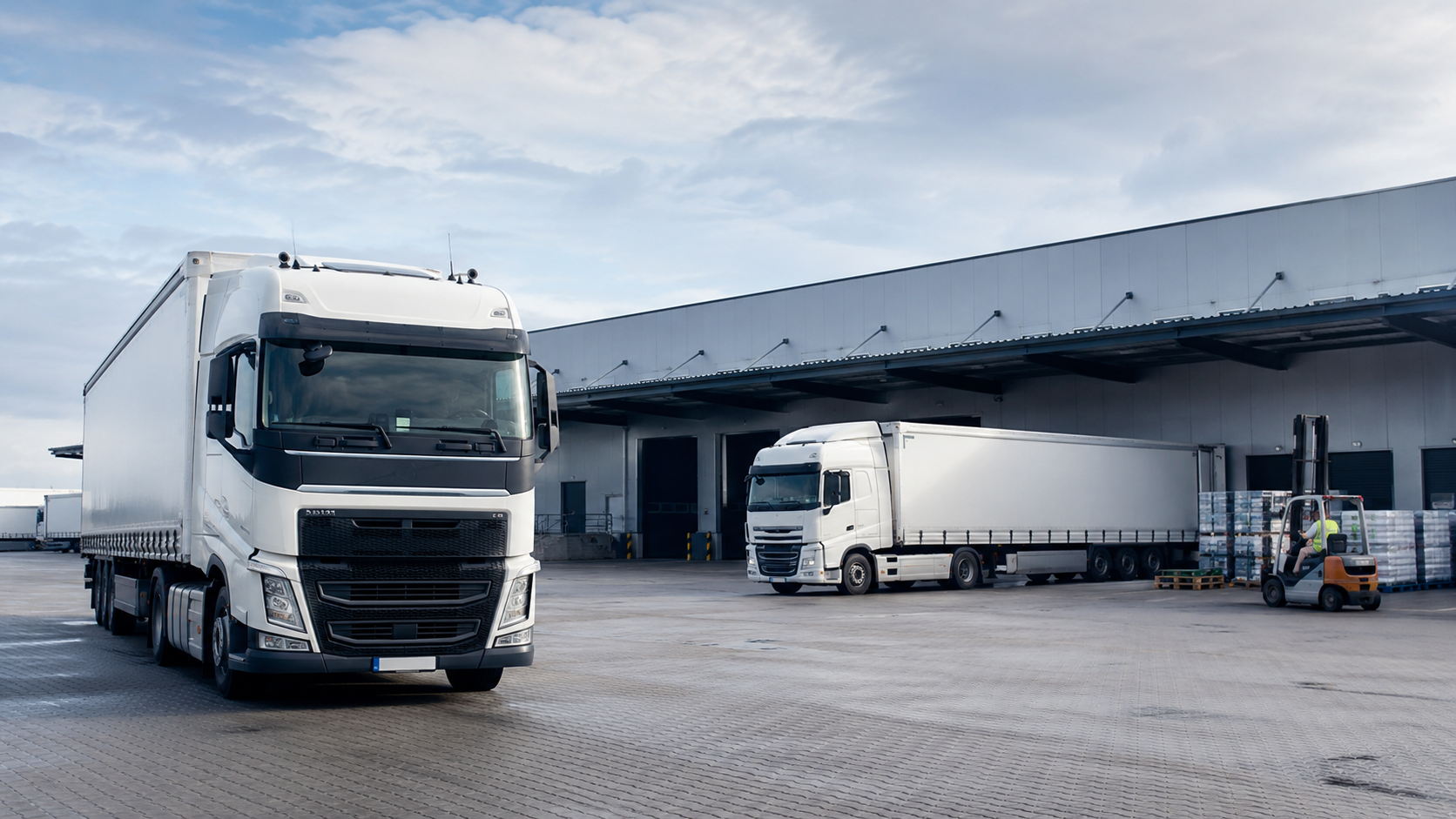
A pallet of machine parts, a heavy item of furniture or an entire production system cannot simply be sent through a standard parcel service. As soon as goods are too heavy, too large or particularly sensitive, a freight forwarder or specialist haulage provider is usually required.
But how do you find a reliable freight forwarder near you? What information does the provider need? What does freight forwarding cost, and how can you avoid unexpected surcharges appearing on the invoice later?
Key Points at a Glance
Before requesting a quote, record the full dimensions, gross weight and type of consignment.
Where possible, obtain three comparable quotes with the same scope of service.
Do not compare price alone. Check transit time, liability, insurance, pre-advice and additional charges.
Confirm the transport order in writing and document the condition of the goods with photographs.
Clarify whether a forklift, pallet truck or tail lift is required at the collection and delivery points.
How Do I Find and Hire a Suitable Freight Forwarder?
First define your freight clearly, including dimensions, weight, packaging type, collection point and delivery address. Then search for suitable providers using local search engines, business directories, recommendations or transport comparison platforms.
Request at least three detailed quotes. Compare not only the final price, but also transit time, liability, insurance and any additional services.
The transport should then be commissioned in writing, and the goods should be prepared so they are safe and ready for carriage.
What Does a Freight Forwarder Actually Do?
A freight forwarder organises the shipment of goods. Under the provisions of the German Commercial Code, its tasks include selecting the appropriate means of transport and route, as well as arranging the required freight, warehousing or forwarding contracts.
The freight forwarder may carry out the transport itself or appoint a carrier to do so.
This distinction is particularly important when it comes to liability:
The freight forwarder organises the shipment.
The carrier actually carries out the transport.
A freight broker brings the customer and transport company together, but does not generally become a party to the transport contract.
In practice, many freight forwarders also act as carriers or undertake the transport for a fixed price under what is known in German law as self-entry.
A freight forwarder is particularly suitable for:
pallets and groupage freight,
machines and equipment,
large items of furniture,
building materials,
bulky spare parts,
vehicles and vehicle parts,
part loads and full loads,
temperature-controlled or particularly sensitive goods.
Step 1: Define the Freight Precisely Before You Search
A reliable quote is only possible if the freight forwarder knows exactly what is to be transported. Missing or inaccurate details often lead to queries, incorrect vehicle planning or later recharges.
For that reason, prepare all relevant transport details in advance where possible.
Collection and Delivery Address
Full addresses are required, including postcode and country. You should also state whether the address is a private residence, warehouse, building site or commercial premises.
Check the following points:
Is the road accessible for a lorry?
Are there width, weight or height restrictions?
Is there enough room for manoeuvring?
Is the address in a pedestrian zone or low-emission zone?
Are there fixed loading or delivery times?
Does the item need to be collected from inside a building or from an upper floor?
A large articulated lorry cannot access every residential street, yard entrance or narrow access road. If a smaller vehicle is needed for collection, the freight forwarder must know this at the planning stage.
Dimensions and Weight
Measure the goods in their transport-ready condition, including the pallet, carton, crate and protective material.
Normally, the following details are required:
length,
width,
height,
number of packages,
gross weight,
total consignment weight.
The gross weight includes both the goods and all packaging materials and load carriers.
Do not round down measurements. Even a few additional centimetres can determine whether the consignment is stackable or whether it takes up extra loading space.
Type and Nature of the Goods
Describe the contents as specifically as possible. The description “machine part” is less helpful than “packed metal component on a Euro pallet, non-stackable”.
In particular, state whether the goods are:
fragile,
at risk of tipping,
particularly valuable,
non-stackable,
temperature-sensitive,
liquid,
magnetic,
dangerous,
unusually long or high.
Dangerous goods, batteries, chemicals and certain technical products must be declared separately. The freight forwarder will need additional information and documents for these shipments.
Packaging Condition
State whether the goods are already packed and ready for transport. Not every freight forwarder provides packaging services.
For unpacked furniture, machines or delicate surfaces, clarify in advance:
Who provides the packaging?
Is a transport crate required?
Are edge protection and padding needed?
Does the item need to be secured on a pallet?
Is additional load securing required?
Required Timeframe
Tell the provider whether the consignment can be transported flexibly or whether it must arrive on a fixed date.
Typical options include:
standard transport,
collection on a specific day,
delivery within a time window,
fixed-date delivery,
same-day transport,
overnight transport,
direct delivery without transhipment.
The tighter the timeframe, the fewer options the freight forwarder has to combine your consignment with other loads. This usually increases the cost.
Practical Tip: Send Photographs
Photograph the fully packed consignment from several angles. The pictures should show the load carrier, packaging and approximate dimensions.
Photographs help the freight forwarder assess the required vehicle, load securing and possible risks. They also serve as evidence of the condition of the goods before transport.
Step 2: Find Freight Forwarders Near You
There is no single best search route. A one-off furniture transport job requires a different type of provider from regular pallet shipments or time-critical machine parts.
Method 1: Local Search via Google and Map Services
Search terms such as “freight forwarder near me”, “pallet transport Munich” or “furniture transport Hamburg freight forwarder” will usually show local providers and their contact details.
Do not focus only on distance. Check:
What types of transport are offered?
Does the fleet suit your consignment?
Is there a real branch or business address?
Are private customers served?
Are national and international transports available?
Are there verifiable references?
How recent are the reviews?
A provider based nearby is not automatically cheaper. Many freight forwarders work with regional partners or scheduled line-haul services, enabling them to offer cost-effective transport even outside their immediate location.
Method 2: Freight Exchanges and Comparison Platforms
Transport platforms and comparison portals can send one enquiry to several providers at once.
This offers several advantages:
fast reach,
multiple quotes,
easier price comparison,
access to available vehicle capacity.
However, you should check who actually becomes the contractual partner. A brokerage platform is not necessarily responsible for carrying out the transport. With pure freight brokers, the actual transport contract is usually concluded between the customer and the transport company that performs the job.
Before booking, check:
Who issues the invoice?
Who is liable in the event of damage?
Who is the contact person if there is a delay?
Who actually carries out the transport?
Which terms and conditions apply?
Method 3: Trade Bodies, Directories and Recommendations
Chambers of commerce, trade associations, suppliers and business partners can also help with the search.
Recommendations are particularly valuable when similar goods have already been transported successfully. A company that regularly ships machine tools may be able to recommend a more suitable provider than someone who only sends standard pallets.
Nevertheless, do not rely solely on personal recommendations. Check every provider against your specific requirements.
How Can You Recognise a Reliable Freight Forwarder?
The term “freight forwarder” alone is not proof of quality. The professional or business designation is not protected as a quality mark in itself. Customers should therefore look carefully at who they are entering into a contract with.
The most important selection criteria include the following.
Complete Company Details
Reputable providers state a serviceable business address, telephone number, email address, legal form and authorised representative. For companies, registration details should be traceable.
Clear Communication
A professional provider asks questions when important information is missing. It will not promise a binding fixed price while dimensions, weight, loading conditions or delivery times remain unclear.
Relevant Experience
Ask whether the freight forwarder has already transported comparable goods. Shipping a Euro pallet is very different from transporting a delicate machine or an unpacked piano.
Insurance and Liability
Ask the provider to explain which liability terms apply and whether additional goods-in-transit insurance is advisable for your consignment.
Written Quote
A serious quote clearly describes the scope of service. Phrases such as “transport charged according to effort” or “additional costs reserved” should be clarified.
Accessible Contact Person
For time-critical or valuable consignments, there should be a named contact person available during transport. An anonymous booking interface with no clear responsibility can be problematic if a claim arises.
Step 3: Obtain and Compare Quotes Properly
Send the same transport data to all selected freight forwarders. Only then will the quotes be genuinely comparable.
Three quotes are a sensible benchmark for many transport jobs. For complex machinery, dangerous goods or project cargo, however, professional suitability may be more important than the number of quotes.
What Information Belongs in a Freight Forwarding Enquiry?
A complete enquiry can be structured as follows.
Collection
full address,
preferred date,
loading times,
contact person and telephone number,
forklift or loading ramp available: yes/no.
Delivery
full address,
preferred delivery date,
time window,
contact person and telephone number,
unloading assistance available: yes/no.
Consignment
goods description,
number of packages,
dimensions per package,
weight per package,
total weight,
packaging type,
stackable or non-stackable,
goods value,
special characteristics.
Required Services
tail lift,
pallet truck,
pre-advice,
fixed-date delivery,
direct transport,
transport insurance,
packaging service,
proof of delivery.
What Should a Professional Freight Quote Include?
A good quote does not simply state a total amount. It describes which services are included in the price and under what assumptions that price applies.
Pay particular attention to:
collection and delivery location,
type and scope of the consignment,
transport price,
VAT,
expected transit time,
collection and delivery period,
tolls and road charges,
fuel surcharges,
pre-advice,
tail lift or pallet truck,
waiting time rules,
pallet exchange,
insurance cover,
payment terms,
validity period of the quote,
underlying terms and conditions.
In Germany, lorries and vehicle combinations with a technically permissible gross vehicle weight of more than 3.5 tonnes are generally subject to tolls where the legal requirements are met. Toll costs may therefore appear as a separate item or already be included in the transport price.
What Does Freight Forwarding Cost?
There is no universal price per pallet or per kilometre. Freight forwarding costs depend on numerous factors:
distance,
weight,
dimensions,
number of packages,
required loading space,
stackability,
collection and delivery region,
vehicle type,
tolls,
fuel costs,
delivery speed,
utilisation of the route,
season and market conditions,
required loading aids,
insurance,
dangerous goods or temperature requirements.
A light, stackable Euro pallet on a regularly served route can usually be transported more cheaply than a machine part of the same weight that cannot be stacked. Non-stackable goods also block the space above the consignment and therefore use more loading capacity.
Why Distance Alone Says Little About Price
A 500-kilometre transport can be cheaper than a 150-kilometre transport. The decisive factor is whether the route is served regularly and whether the consignment can be combined with other loads.
The following are often more expensive:
remote collection points,
island deliveries,
city-centre locations,
narrow time windows,
weekend transports,
short-notice bookings,
direct runs,
special vehicles,
non-stackable goods,
several hours of waiting time.
What Does It Cost to Ship One Pallet?
For a reliable calculation, the provider needs at least the origin and destination postcodes, pallet dimensions, height, weight, type of goods and preferred date.
Flat online prices are only meaningful if all conditions are met. If, for example, a standard Euro pallet is booked but the handed-over pallet overhangs or is non-stackable, a surcharge may be applied.
Groupage, Part Load or Full Load?
The right transport type has a major impact on cost, transit time and the risk of damage during handling.
Criterion
Groupage
Part Load – LTL
Full Load – FTL
Typical scope
individual packages or a few pallets
a larger share of the loading space
complete lorry
Combined with other freight
yes
usually yes
usually no
Transhipments
often possible
depends on the transport concept
usually none
Transit time
standard network transit time
individual
usually direct
Cost
economical for small consignments
economical for medium volumes
suitable for larger volumes
Risk of damage
higher due to handling
medium risk
lower with direct transport
Schedule accuracy
limited
can be agreed individually
very easy to plan
Groupage
Groupage consists of individual, manageable transport units, such as cartons, crates or pallets. Several consignments from different customers are consolidated and distributed via transhipment depots.
Part Load or LTL
LTL stands for “Less than Truckload”. The goods require a larger part of the loading space but do not fill the lorry completely. The remaining space is used for other consignments.
Full Load or FTL
FTL stands for “Full Truckload”. The entire loading space is reserved for one order. The goods often travel directly from the sender to the recipient without transhipment.
A full load can also make sense even if the lorry is not loaded to its maximum weight. This applies, for example, to bulky, particularly sensitive or theft-prone goods.
Beware of Hidden Additional Costs
Many recharges do not arise because a provider is dishonest, but because conditions were not stated in the enquiry.
Typical additional costs include the following.
Waiting Time
If the driver cannot load or unload at the agreed time, waiting time charges may arise after a free waiting period. The exact rule should be stated in the quote.
Failed Collection or Delivery Attempt
If nobody is on site, the goods are not ready or access is blocked, the freight forwarder may charge for a second visit.
Missing Loading Aids
If a forklift was said to be available but a tail lift is actually required, another vehicle may have to be sent.
Different Dimensions or Weights
If the consignment is larger or heavier than stated, the freight rate may change. In the worst case, the planned vehicle may be unable to take the goods.
Non-Stackable Goods
A pallet booked as stackable may be loaded with other consignments on top. If it is not actually stackable, it requires more loading space and is often more expensive.
Floors and Internal Handling
“Kerbside delivery” does not mean that the driver will carry furniture into a flat, move machines to their installation point or take pallets into a warehouse. Such services must be expressly agreed.
Pallet Exchange
When Euro pallets are exchanged, additional costs or pallet debts may arise. Clarify whether an exchange is planned and what condition the exchange pallets must be in.
Checklist: Comparing Freight Forwarders Fairly
Checkpoint
Provider A
Provider B
Provider C
Total price including surcharges
Collection included
Delivery included
Tolls included
Fuel surcharge included
Tail lift included
Pre-advice included
Fixed date confirmed
Maximum waiting time included
Liability terms stated
Additional insurance offered
Consignment tracking available
Proof of delivery available
Contact person named
Payment terms clear
The Three Most Expensive Mistakes When Hiring a Freight Forwarder
Mistake 1: Estimating Dimensions and Weight
Understated dimensions can mean that the consignment does not fit into the planned vehicle or requires more loading space. Always measure the fully packed goods.
Mistake 2: Comparing Only the Lowest Price
A cheap quote may exclude important services. If a tail lift, pre-advice, insurance or time-specific delivery is added later, the supposedly cheapest provider may become more expensive.
Mistake 3: Ignoring the Value of the Goods
Statutory liability is often based on weight and not automatically on the full value of the goods. For light but expensive items, this can create a significant cover gap.
Step 4: Commission the Freight Forwarder in Writing
A verbal order can be legally effective in principle, but it is rarely advisable for transport jobs. A written order creates clarity and serves as evidence in the event of a dispute.
The transport order should include at least:
customer,
invoice recipient,
collection address,
delivery address,
contact person,
collection and delivery date,
goods description,
number of packages,
dimensions and weight,
goods value,
packaging type,
required loading aids,
agreed price,
additional services,
payment terms,
liability and insurance terms,
special instructions.
Check the freight forwarder’s order confirmation. If data, vehicle requirements or dates do not match your enquiry, object immediately.
Forwarding Contract and Contract of Carriage: What Is the Difference?
Under a forwarding contract, the freight forwarder undertakes to organise the shipment of the goods. Under a contract of carriage, the carrier undertakes to carry the goods to the destination and deliver them there. The sender owes the agreed freight charge.
For customers, the crucial point is who their actual contractual partner is. This should be clear from the quote, order confirmation and invoice.
What Role Does the Consignment Note Play?
The consignment note documents key information about the consignment and the transport. It may include:
sender,
recipient,
carrier,
place of collection,
place of delivery,
number and type of packages,
goods description,
weight,
special instructions.
For international road transport, a CMR consignment note is often used. In domestic transport, other freight or accompanying documents may be used depending on the transport type.
A delivery note is not legally required for every delivery of goods. However, it has an important information, checking and evidential function and should therefore be carried in many cases.
How Are Goods Insured with a Freight Forwarder?
Liability and transport insurance must be clearly distinguished.
Statutory Liability
In the event of loss or damage, liability under Section 431 of the German Commercial Code is generally limited to 8.33 units of account, or Special Drawing Rights, per kilogram of gross weight.
The equivalent value in euros is not fixed permanently. It depends on the current value of the Special Drawing Right.
The commonly used statement “around 10 euros per kilogram” is therefore only a rough guide.
Example:
A consignment weighs 100 kilograms but has a goods value of 20,000 euros. The regular weight-based liability limit may be far below the actual value of the goods.
Carrier’s Liability Insurance
A carrier typically has goods damage liability insurance. However, this primarily protects the carrier against statutory liability claims. It is not automatically the same as full-value goods insurance.
Additional Transport Insurance
For valuable, delicate or lightweight goods, separate transport insurance may be advisable. In this case, an agreed goods value is insured.
Before placing the order, clarify:
Which liability rules apply?
Which exclusions exist?
Is the full value of the goods covered?
Does the cover apply during loading and unloading?
Are theft, breakage and moisture damage included?
What excess applies?
Who reports a claim?
The German Freight Forwarders’ Standard Terms and Conditions also contain rules on liability and insurance. Whether and in which version they apply depends on whether they have been validly incorporated into the contract.
Step 5: Prepare the Consignment for Collection
After the order has been placed, practical preparation begins. The goods should be fully packed, accessible and ready for loading at the agreed time.
Packing a Pallet Safely for Transport
Use a Suitable Pallet
The pallet must suit the weight and dimensions of the goods. Damaged boards, loose blocks or protruding nails can compromise stability.
Distribute Weight Evenly
Heavy items belong at the bottom. The weight should be distributed as evenly as possible across the pallet.
Avoid Overhang
Cartons or components should not protrude beyond the edge of the pallet. Overhanging goods are more easily damaged and may take up additional loading space.
Fill Voids
Movable items must be padded and secured. Use suitable void fill, foam or intermediate layers.
Secure the Goods to the Pallet
Stretch film alone is often not enough for heavy goods. Depending on the consignment, additional strapping, lashing straps, anti-slip mats or a wooden crate may be required.
The load must be secured so that it cannot slide or tip during braking, acceleration or cornering.
Protect Edges
Edge protection profiles prevent film or strapping from damaging cartons and sensitive surfaces.
Add Labelling
Attach address labels clearly and visibly. Where necessary, additional markings may be useful, such as:
do not stack,
fragile,
keep dry,
centre of gravity,
this way up,
do not tip.
However, such markings are not a substitute for transport-safe packaging.
Which Documents Are Required?
Depending on the transport, the following documents may be required:
transport order,
delivery note,
consignment note,
packing list,
commercial invoice,
customs documents,
certificate of origin,
dangerous goods documents,
safety data sheet,
export accompanying document,
permits for special transports.
For a purely domestic standard transport, fewer documents are often required than for an international or customs-relevant shipment.
Preparing for Collection
Before the driver arrives, make sure that:
the goods are fully packed,
all packages are labelled,
the actual dimensions match the order,
the loading area is clear,
access routes and gates are open,
contact persons are reachable,
forklift or pallet truck is available,
accompanying documents are complete,
photographs of the condition have been taken.
If the goods cannot be loaded at ground level, this must be communicated in advance.
Goods Receipt: Document Damage Immediately
On delivery, check the goods for visible damage as far as possible.
Look for:
torn film,
damaged cartons,
broken pallets,
dents or scratches,
moisture,
missing packages,
shifted load.
Visible damage should be noted on the proof of delivery as specifically as possible. The wording “packaging damaged, right-hand carton dented” is more meaningful than a general reservation such as “accepted subject to inspection”.
Photograph the damage, packaging, load carriers and vehicle condition. Then inform the freight forwarder immediately in writing.
What Does Pre-Advice Mean?
Pre-advice means that the freight forwarder announces the collection or delivery in advance. This is often done by telephone, email or text message.
Pre-advice is particularly useful:
for private addresses,
for locations without a permanently staffed goods-in area,
when loading aids are required,
for narrow access routes,
for agreed time windows.
However, pre-advice is not automatically a guaranteed fixed delivery time. Clarify whether only the delivery day will be announced or whether a binding time window has been agreed.
What Does “Kerbside Delivery” Mean?
With kerbside delivery, the goods are usually unloaded at the nearest point accessible to the vehicle. Further movement into a building, flat, workshop or warehouse is normally not included.
If you need the goods carried in, positioned or assembled, these services must be expressly agreed.
For heavy goods, it should also be clarified whether the driver unloads at all or whether the recipient must provide a forklift.
Which Freight Forwarder Is Suitable for Private Customers?
Not every freight forwarder works with private customers. Some companies specialise in regular business customers, standardised pallets or large freight volumes.
Private customers should specifically look for providers that offer:
collection from residential addresses,
tail lift and pallet truck,
telephone pre-advice,
furniture or bulky goods transport,
packaging service,
transparent final prices,
help with transport paperwork.
For furniture, clarify whether the price includes only transport or also dismantling, packaging and carrying services.
When Is Direct Transport Better Than Groupage?
With direct transport, the consignment is usually moved from the collection point to the recipient without scheduled transhipment.
This is particularly useful for:
time-critical spare parts,
sensitive machines,
prototypes,
high-value goods,
confidential documents,
goods with a high risk of damage,
fixed production or installation dates.
Direct transport is usually more expensive than groupage, but offers more control, shorter transit times and a lower handling risk.
Conclusion: Good Freight Forwarding Starts Before the Search
Anyone who wants to find a reliable freight forwarder nearby should not begin with price comparison. The most important step is an accurate description of the freight.
Only once dimensions, weight, packaging, dates and loading conditions are clear can freight forwarders prepare realistic and comparable quotes. After that, do not focus only on the final price. Also consider liability, insurance, transit time, additional services and possible ancillary costs.
Commission the transport in writing, check the order confirmation and document the condition of the goods. This significantly reduces the risk of delays, recharges and transport damage.
Already have a specific consignment? Describe the collection point, destination, dimensions, weight and preferred date to receive an individual transport quote.
FAQ: Frequently Asked Questions About Hiring a Freight Forwarder
What Is the Difference Between a Freight Forwarder and a Parcel Courier?
Parcel couriers work with highly standardised consignment sizes, weights and automated sorting systems. A freight forwarder organises the transport of larger, heavier or non-standard goods such as pallets, machines and bulky items. It can also offer individual services such as a tail lift, direct transport or time-specific delivery.
How Is My Consignment Insured with a Freight Forwarder?
Statutory liability in the event of loss or damage is generally limited to 8.33 Special Drawing Rights per kilogram of gross weight. For light and valuable goods, this can be significantly below the actual value of the goods. Additional transport insurance should therefore be considered for such consignments.
Do I Have to Be Present at Collection and Delivery?
As a rule, someone must be on site to hand over or accept the goods and sign the transport documents. Alternatively, an authorised contact person can be appointed. For private addresses or unstaffed locations, arrange pre-advice.
What Does Part Load Mean?
A part load uses only part of a lorry’s loading space. The remaining capacity is used for other consignments. This often makes a part load cheaper than an exclusively used full vehicle.
What Does Full Load Mean?
With a full load, the entire loading space is reserved for one order. The consignment is often transported directly and without transhipment. This is suitable for large quantities of goods as well as sensitive or particularly urgent items.
What Does “Kerbside Delivery” Mean?
The goods are unloaded at a point accessible to the vehicle, usually at the roadside or in front of the property. Carrying goods into a building or to an upper floor is normally not included. A carrying or positioning service must be agreed separately.
How Do I Pack a Pallet Safely for Transport?
Stack the goods securely on a suitable pallet without overhang. Fill voids, protect edges and secure the load firmly to the load carrier with film, strapping or lashing straps. Heavy goods often require additional securing materials or a sturdy transport crate.
What Happens If My Consignment Is Larger Than Stated?
The freight forwarder may recalculate the price or refuse collection if the planned vehicle is insufficient. Additional loading space, handling or waiting time costs may also arise. Always measure and weigh the fully packed consignment.
Is the Cheapest Freight Forwarder Automatically the Best?
No. A low base price may exclude important services such as pre-advice, tail lift, insurance or time-specific delivery. Always compare the full scope of service and possible additional costs.
Do I Always Need a Consignment Note?
A traditional consignment note is not compulsory for every domestic transport. Nevertheless, the key consignment and contract details should be documented in writing. For international road transport, a CMR consignment note is regularly used.
 Dansk
Dansk
 Deutsch
 Eesti
Eesti
 English (GB)
 Español
 Français
 Hrvatski
 Italiano
 Latviešu valoda
 Lietuviškai
 Magyar
 Nederlands
 Norsk Bokmål
 Polski
 Português
 Română
 Slovenčina
 Slovenščina
 Suomi
Suomi
 Svenska
 Čeština
 Ελληνικά
 Русский
 Українська
 български
 العربية
 中文 (中国)
 English