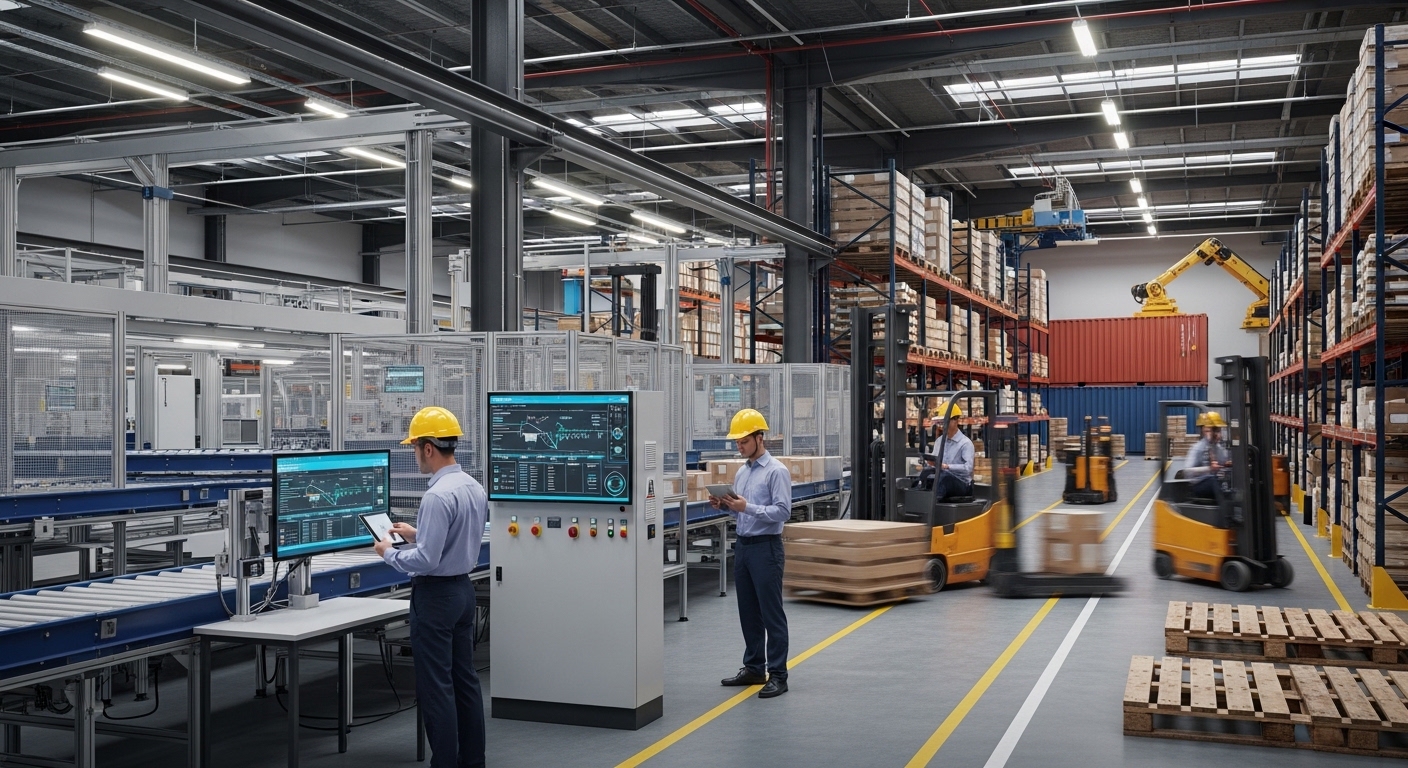
Supply chain disruptions in industry have become a critical challenge in recent years. Global raw material shortages, complex procurement processes and fragile supply chains increasingly affect production stability and business success. Rising costs, delayed operations and uncertain delivery times put pressure on companies across all sectors. To remain competitive, businesses must focus on effective supply chain management, transparent customer communication and flexible logistics solutions. Courier services play a key role in bridging short-term bottlenecks and preventing costly production downtime.
Supply chain disruptions are mainly caused by global raw material shortages, delivery bottlenecks for intermediate goods, complex procurement structures and insufficiently diversified supplier networks.
Supply chain disruptions usually result from several interconnected factors. Global shortages of raw materials affect many industries simultaneously. Delays in intermediate goods often halt entire production lines. International sourcing increases dependency on external markets and transport routes. Political instability, pandemics and natural disasters intensify these risks. Many companies rely on too few suppliers. Without strategic diversification, even minor disruptions can have major consequences. This makes professional supply chain management essential.
Rising procurement costs are one of the most severe consequences of supply chain disruptions. When supply chains fail, companies often turn to more expensive alternatives. This significantly increases operating costs. A prominent example is the semiconductor crisis. Severe shortages caused prices for microchips to rise sharply. Industries such as automotive manufacturing faced production shutdowns as a result. Higher costs weaken competitiveness and reduce margins. In urgent cases, companies rely on courier services to source critical components quickly.
Operational delays are a direct outcome of disrupted supply chains. Missing materials interrupt production schedules. Time-sensitive sectors such as transport and infrastructure are particularly affected. Rail operations, for example, depend on punctual deliveries to maintain schedules. Even small delays can lead to large-scale disruptions. Targeted crisis management helps reduce these risks. Big data technologies improve forecasting and planning. Optimised logistics enable faster responses to unexpected supply issues.
Supply chain disruptions pose a serious threat to long-term business growth. Production losses reduce revenue and damage customer trust. At the same time, procurement and logistics costs rise. Longer lead times weaken market positioning. Small and medium-sized enterprises are especially vulnerable. Unstable supply chains reduce planning reliability. Companies must reassess supplier management strategies. Better demand forecasting and material planning improve resilience. Financial stability depends on secure and flexible supply structures.
Effective risk controlling is essential to managing supply chain disruptions. It starts with detailed bottleneck analysis. Early risk identification allows preventive action. Contract management plays a crucial role. Flexible contract models improve responsiveness in crisis situations. Transparency across the supply chain increases control. Companies should regularly review procurement strategies. Optimised logistics planning strengthens resilience. This creates a sustainable and future-proof sourcing model.
Courier services, like DAGOExpress, have become increasingly important during supply chain disruptions. They provide fast and flexible transport when standard logistics fail. Time-critical shipments benefit most from express delivery. Companies gain access to same-day and next-day delivery options across Europe. Long-term partnerships often reduce costs. They also improve planning security. Courier services support supply chain optimisation. They help prevent production downtime and ensure reliable customer deliveries. This directly supports sustainable business growth.
Supply chain disruptions are no longer temporary issues but long-term challenges. Companies that invest in supplier diversification, inventory management and flexible logistics gain a clear advantage. Cooperation with professional courier services adds critical flexibility in emergency situations. Proactive risk management and transparent communication strengthen resilience. Businesses that act early remain reliable, competitive and ready for future disruptions.


