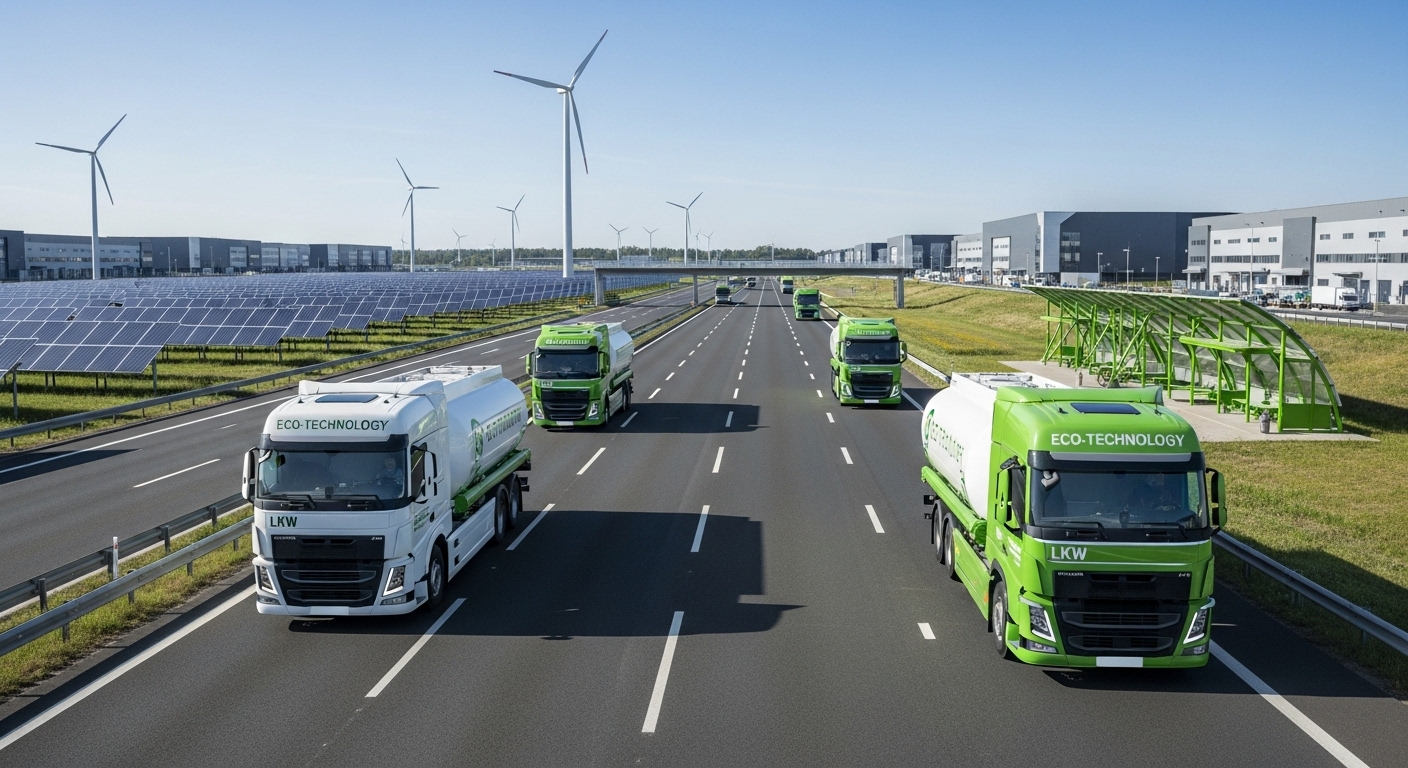
Modern truck transport offers enormous potential for reducing CO₂ emissions. Studies and real-world applications show that emissions can be lowered by 20–60%, and in some cases even more. Three factors are decisive: the type of drivetrain used, vehicle utilisation and consistently optimised processes. Companies benefit twice over. They cut emissions measurably while also reducing fuel and operating costs. Sustainable freight transport therefore becomes not only an environmental responsibility but also a clear economic advantage.
By combining efficient drivetrains, improved vehicle utilisation and digital processes, CO₂ emissions in road freight transport can be reduced by 20–60%, and in some cases by up to 90%.
Pressure on logistics companies and freight operators is increasing rapidly. The EU is tightening CO₂ fleet targets for heavy-duty vehicles. By 2030, emissions are expected to fall by around 45% compared with 2019/20 levels. This affects manufacturers and fleet operators alike. At the same time, customers are increasingly demanding transparent and “green” supply chains. Sustainability is becoming a decisive factor in tenders. Companies that act early secure a clear competitive advantage, while those who delay face higher costs, potential penalties and lost contracts.
The greatest CO₂ reduction potential lies in the drivetrain. Electric and hydrogen-powered trucks can cut emissions by up to 90% compared with conventional diesel vehicles, especially when renewable electricity is used. Bio-LNG and LBG trucks provide another practical solution. Depending on the fuel blend, CO₂ reductions of 15–95% are possible. A major advantage is ease of integration. Existing fleets can often be converted with minimal technical effort, allowing rapid progress without disrupting daily operations.
Not all emission reductions require new vehicles. Intelligent route planning alone can significantly reduce fuel consumption. Empty runs are among the biggest emission drivers in road freight transport. Digital planning tools help minimise them. In addition, shipment consolidation increases load factors per journey. Well-planned hub-and-spoke concepts enable better bundling of goods flows. Every additional loaded kilometre lowers CO₂ emissions per shipment while reducing costs per transported unit.
Human behaviour remains a critical factor. Eco-driving techniques can reduce fuel consumption in truck operations by up to 15%, directly lowering emissions and operating costs. Modern telematics systems support this effect. They monitor driving behaviour, idling times and standstill periods. As a result, optimisation potential becomes transparent. Training programmes can be targeted more effectively, and their success can be measured objectively. This creates a data-driven foundation for continuous improvement.
EU regulations set binding CO₂ targets for truck fleets. Failure to comply can result in substantial penalties. This makes low-emission vehicles economically attractive. At the same time, sustainable transport concepts improve ESG ratings. This reduces regulatory risks and strengthens investor confidence. Brand perception also benefits. Customers increasingly associate green logistics with reliability and future readiness. Sustainability thus becomes an integral part of corporate strategy.
The first step is transparency. A detailed CO₂ footprint by vehicle class, route and customer requirement reveals the greatest levers. This is followed by a targeted mix of measures. Pilot routes using electric or bio-LNG trucks provide reliable operational insights. Route planning software improves daily dispatching. Driver training reduces fuel consumption in the long term. Key performance indicators such as g/km, litres per 100 km or g per shipment make progress measurable. This creates a continuous optimisation process.
Modern truck transport proves that climate protection and economic efficiency go hand in hand. Companies that optimise drivetrains, utilisation and processes significantly reduce emissions while cutting costs. Stricter regulations and growing customer expectations make swift action essential. Businesses that invest now secure long-term advantages. Green logistics is no longer an obligation but a genuine success factor.


