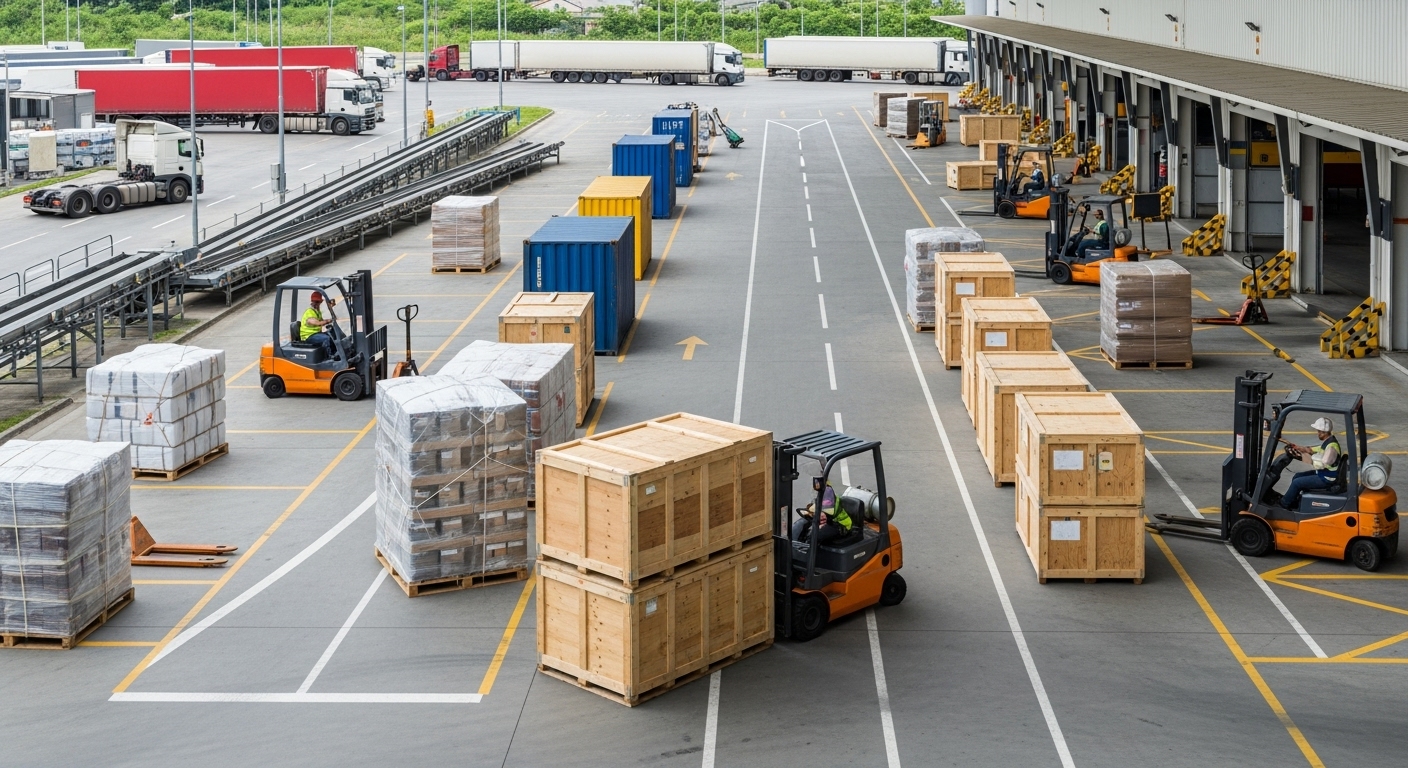
A shipment can be too large for a practical parcel service without needing an entire truck. Palletized freight and less-than-truckload shipping offer ways to move goods as identifiable handling units using shared capacity.
A pallet describes how freight is prepared. LTL describes a transportation model. A pallet can move through an LTL network, on a full truckload, or in a directly assigned vehicle.
A handling unit may be a pallet of cartons, a crate, or a properly prepared piece of equipment. The provider needs to know how many separate units it must load and unload, not merely how many products are inside them.
Include the pallet or crate in the shipment's weight and dimensions. Measure the highest and widest points after packaging. State whether another shipment can safely be stacked on top; do not claim stackability just to obtain a lower quote.
A carrier may collect freight, take it to a terminal, transfer it through its network, and deliver it with a local vehicle. This combines many shippers' freight efficiently but can involve multiple handling points.
The exact route and service vary by carrier. Ask about estimated transit, appointments, and available delivery services. A shared-network quote is not the same commitment as a dedicated delivery arrangement.
A 48-by-40-inch pallet is a familiar US example, but it is not mandatory or appropriate for every item. Choose a base that supports the actual freight, and report its true size.
Shipment characteristics, lane, density, commodity classification where applicable, and extra services can affect LTL pricing. Ask the carrier or broker to confirm the correct classification and tariff treatment instead of guessing from another product.
Residential pickup, limited-access delivery, appointments, liftgates, and waiting may change the cost. Review the freight quote comparison guide before choosing an offer based only on its base rate.
A fixed deadline, fragile load, unusual dimensions, or a requirement for fewer handoffs may justify a direct vehicle. The decision should reflect the shipment's handling and timing needs, not simply whether it fits on a pallet.
For an oversized item, discuss big and bulky delivery. If the destination has no loading dock, use the liftgate delivery guide to establish whether ground-level unloading is feasible.
Send the packaged dimensions, gross weight, item description, photos, and loading details. Ask the receiver to confirm the appointment and unloading method. At collection, check the piece count and preserve the shipping documents. Accurate preparation makes both the quote and the delivery plan more dependable.