Why Use a 3PL? Benefits, Costs and a Provider Checklist
Use a third-party logistics provider when an external specialist can perform a defined part of your logistics operation more effectively than your current setup. A 3PL may handle transportation, warehousing, fulfillment or a combination of services. The benefit depends on the scope, pricing, operating discipline and service agreement—not simply on outsourcing.
This guide explains where a 3PL can help, when it may not be worth the cost and how to compare providers using a practical cost model, scorecard and pilot plan.
Table of contents
What is a 3PL?
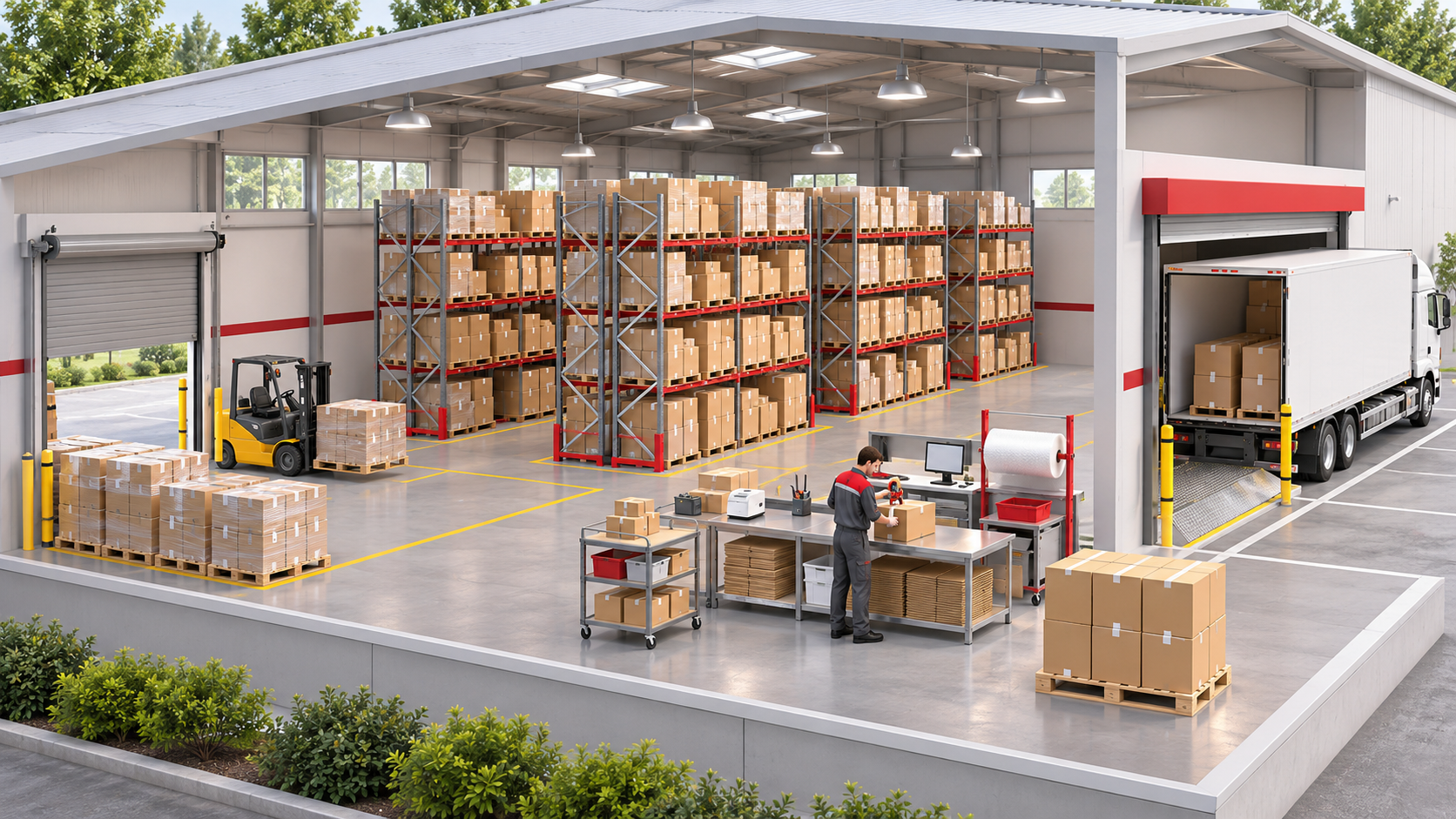
3PL stands for third-party logistics. A business contracts with an external provider to carry out agreed logistics activities. The arrangement can be narrow, such as transportation coordination, or broader, such as receiving inventory, storing products, picking orders and arranging outbound delivery.
Not every 3PL owns trucks or warehouses, and not every provider offers every service. The Association for Supply Chain Management's overview of 3PL logistics identifies activities ranging from warehousing and inventory management to transportation and returns. Define the services you need before evaluating the label.
What can a 3PL do—and what remains your responsibility?
Example scope map for a logistics outsourcing discussion
Activity
Possible provider role
What the shipper must define
Transportation
Source capacity, arrange shipments and coordinate exceptions.
Goods, dimensions, deadlines, site access and approval limits.
Warehousing
Receive, store and control inventory in an agreed facility.
Storage conditions, stock ownership and reconciliation rules.
Fulfillment
Pick, pack, label and hand orders to delivery providers.
Order cutoffs, packaging standards and accuracy requirements.
Returns
Receive, inspect, sort and report returned goods.
Inspection criteria and who authorizes restocking or disposal.
Reporting
Supply agreed shipment, inventory or performance data.
Metric definitions, data access and exception ownership.
Outsourcing execution does not remove the need for an accountable internal owner. Someone in your business must approve changes, resolve commercial questions and check whether the provider is meeting the agreed requirements.
3PL vs. freight broker vs. carrier vs. 4PL
A motor carrier physically transports goods. A freight broker arranges transportation with motor carriers. A 3PL is a broader description of outsourced logistics services; transportation brokerage can be one part of that scope. A 4PL or lead logistics arrangement generally places more emphasis on coordinating multiple providers and managing an overall logistics program.
These descriptions can overlap in marketing. Ask which entity contracts with you, which activities it performs directly, which it subcontracts and who handles exceptions. A shipment-tracking portal does not automatically make a provider a full-service warehouse or supply-chain manager.
Five reasons to consider a 3PL
1. Your team spends too much time coordinating routine shipments
A provider can take on defined booking, follow-up and exception tasks. The useful outcome is fewer avoidable handoffs and a clear escalation path. Measure hours released and service quality, rather than assuming every outsourced activity saves labor.
2. Demand varies more than your fixed resources can handle
External capacity can help with seasonal peaks or expansion into a new region. Confirm what capacity is actually committed, how much notice is required and whether minimum charges apply when demand falls. “Flexible” does not necessarily mean unlimited availability or no fixed cost.
3. You need a specific capability
The gap may be inventory accuracy, order fulfillment, a transport lane or urgent delivery coordination. Choose a provider with evidence relevant to that problem. A large service catalog is less useful than a proven operating process for your goods and customers.
4. Your costs are difficult to understand
An agreed reporting and invoice process can make cost drivers visible. Separate transportation, handling, storage and exception charges. Better visibility may reveal savings opportunities, but savings still require operational changes or better purchasing decisions.
5. You want to grow without building every logistics function yourself
Outsourcing can avoid some upfront investment in facilities, systems and hiring. Include onboarding, integration and management effort in the comparison. A provider relationship still needs supervision and an exit plan.
When a 3PL may not be the right answer
Your current operation is simple, reliable and inexpensive, while provider minimums would add unnecessary cost.
Your product or delivery requirements are not supported by the proposed service.
Your inventory, order or shipment data is too inaccurate for a reliable handover.
You cannot agree who owns exceptions, performance measurement or access to operational records.
The problem is a single urgent shipment rather than an ongoing logistics function.
For the last case, a targeted dedicated delivery or expedited freight arrangement may address the immediate need without a broader outsourcing project.
How much does a 3PL cost?
There is no universal 3PL price. The charging model follows the work: a transport-focused arrangement may price shipments and additional services, while a fulfillment operation may charge for receiving, storage, picking, packing, shipping and returns. Ask about setup, integration, account management, minimums, peak-period terms and termination or inventory-transfer charges.
A worked monthly cost comparison
The following figures are hypothetical planning assumptions, not DAGO Express prices or industry averages. Consider a business handling 1,000 orders per month. Its allocated in-house operating cost is $6,500 per month, excluding outbound transportation. A provider proposes $3,000 for handling, $1,200 for storage and receiving, and $300 for account and system fees. Internal oversight would still cost $800 per month.
The comparable outsourced operating cost would be $5,300: $3,000 + $1,200 + $300 + $800. That is $1,200 below the in-house allocation. If onboarding costs $6,000, the simple payback would be five months, assuming the $1,200 difference is actually achievable.
That last condition matters. An allocated warehouse expense may continue after outsourcing; it is not a cash saving unless it can be avoided or the capacity has another valuable use. Add transportation, returns and exception charges consistently to both scenarios. Stress-test lower volume, peak volume and a slower implementation before deciding.
How to choose a 3PL: a practical provider scorecard
Use the same shipment or order sample for every candidate. Score each area from 1 to 5, record the evidence and set your own weights. Treat unsupported mandatory requirements as a reason to stop, regardless of the overall score.
Operational fit: Can the provider show how it handles your dimensions, products, channels and destinations?
Service commitments: Are cutoffs, receiving windows and exception response responsibilities documented?
Total cost: Can you reconcile the sample invoice against a complete rate schedule?
Data and integration: Can orders, status events and invoices move between your systems with a defined error-handling process?
Capacity and continuity: What happens during peaks, staff shortages or a service interruption?
Accountability: Who is your operational contact, who handles escalation and which work is subcontracted?
Exit readiness: Can you retrieve your data and move inventory or services without an undefined transition?
Ask for references that resemble your actual operation. Review DAGO Express transport references when evaluating the transportation part of your requirements.
Which performance metrics should you agree?
Choose a small set of metrics tied to the outsourced scope. Define the numerator, denominator, time zone and exclusions before the pilot starts. For example, on-time delivery can mean arrival within an appointment window or before a promised deadline; those are not interchangeable.
Transportation: on-time pickup, on-time delivery, exception response time and cost per comparable shipment.
Fulfillment: order accuracy, on-time dispatch and inventory discrepancies.
Administration: invoice accuracy, unresolved claims or disputes and time spent on manual follow-up.
Do not compare unlike shipments without context. A lower average cost can simply reflect a shift toward shorter lanes or lighter orders.
A staged pilot before a wider rollout
Document the baseline: capture current service, cost and exception data for a representative period.
Limit the starting scope: choose a lane, customer group or product segment with clear boundaries.
Test normal and exception cases: include an order change, missed data field, delayed pickup and invoice discrepancy.
Review results together: compare the agreed metrics and identify which process caused each failure.
Expand only after acceptance: confirm responsibilities, capacity and rollback arrangements for the next phase.
How a TMS fits into a 3PL relationship
A transportation management system is software; a 3PL is a service relationship. You may use your own TMS, the provider's system or a connection between them. Decide who owns shipment identifiers, rate data, event history and access rights. Our transportation management system guide explains the workflow and integration questions.
Also agree how transport modes are selected. The LTL vs. FTL comparison helps separate capacity, handling and deadline requirements.
Where DAGO Express fits
If your need is US transportation coordination, discuss the specific shipment or recurring route with DAGO Express. DAGO Express Inc. is a freight broker arranging transportation with independent motor carriers. This article describes the broader 3PL market; it is not a claim that DAGO Express operates warehouses, provides inventory management or offers every fulfillment service listed above.
Start with your origin and destination, packed dimensions, gross weight, ready time, delivery deadline and site restrictions. Explore business transportation options and agree the precise service scope before booking.
Frequently asked questions
Is a 3PL only for large companies?
No. A smaller business may benefit from a narrowly defined outsourced service. Check minimum charges and implementation effort against the actual problem you need to solve.
Will a 3PL always reduce shipping costs?
No. A provider may improve service or release internal capacity without lowering every invoice. Compare total comparable cost and measurable operational benefits.
Does using a 3PL mean giving up control?
You delegate agreed activities, but can retain control through clear service definitions, approval rules, reporting and access to data. Vague responsibility boundaries are the greater risk.
Can I outsource transportation without warehousing?
Yes. Logistics services can be scoped separately. Confirm what the provider actually supplies and avoid paying for a broader package you do not need.
What should I do before signing a 3PL agreement?
Validate the scope, full rate schedule, performance definitions, responsibilities, data access and transition arrangements. Use a representative pilot to test the promised process.
 Dansk
 Deutsch
 Eesti
 English (GB)
 Español
 Français
 Hrvatski
 Italiano
 Latviešu valoda
 Lietuviškai
 Magyar
 Nederlands
 Norsk Bokmål
 Polski
 Português
 Română
 Slovenčina
 Slovenščina
 Suomi
 Svenska
 Čeština
 Ελληνικά
 Русский
 Українська
 български
 العربية
 中文 (中国)
 English