Register
Login

How to Ship a Pallet in the US: Packaging, Liftgate and Delivery Checklist

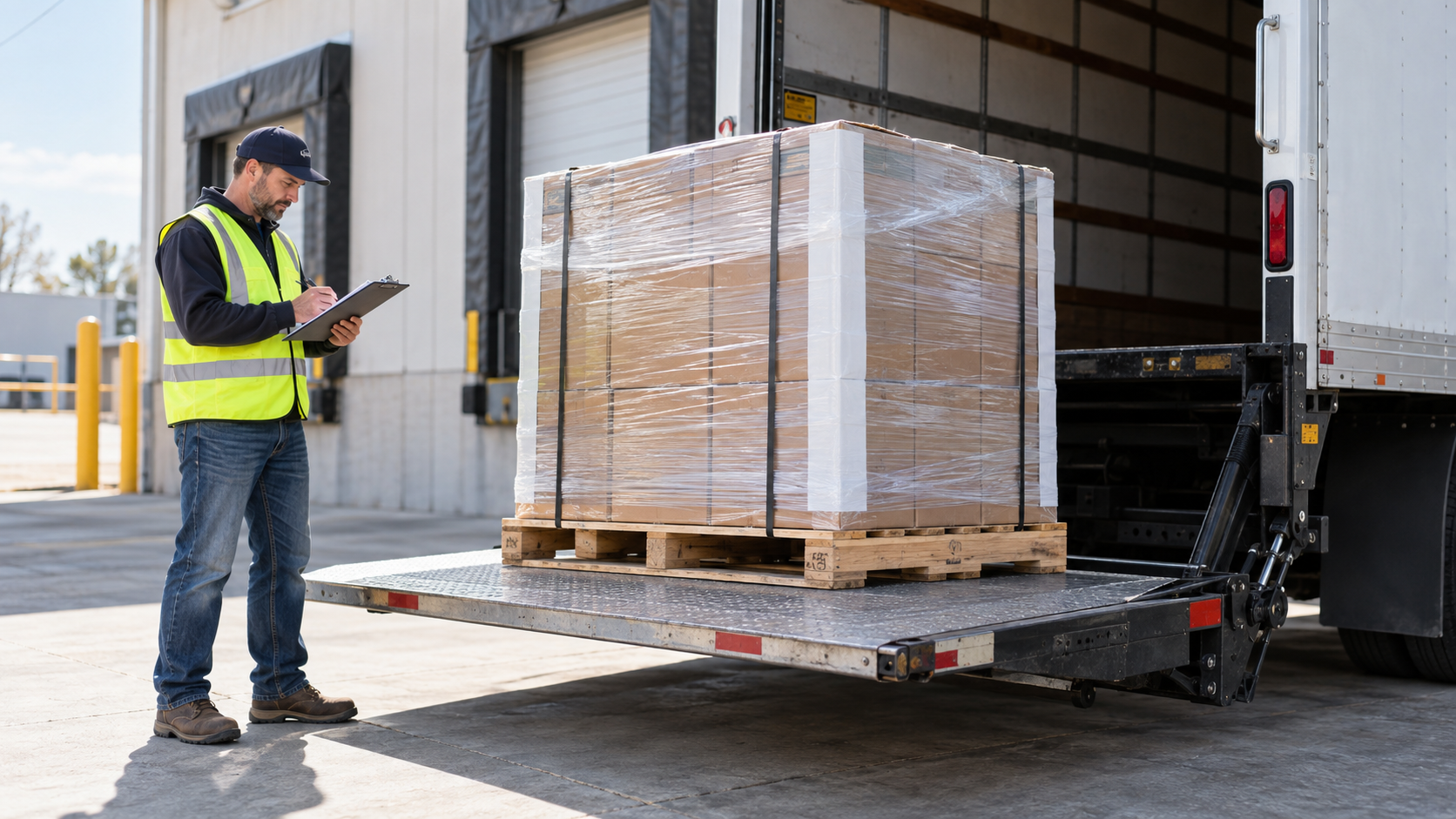
Shrink-wrapped pallet on a delivery truck liftgate with a worker checking the shipment

Pallet shipping begins before a carrier arrives. A sound base, accurate gross measurements and a receiving plan help prevent a quote from changing or a delivery from failing. A 48-by-40-inch pallet is common in the US, but the base must support the actual freight and fit the equipment at both locations; it is not a universal rule.

Build a stable handling unit

Use a pallet in good condition and distribute weight so the load cannot tip under normal movement. Keep cartons within the base where practical, protect exposed corners, and use suitable wrapping or strapping without crushing the goods. Heavy or irregular equipment may need a purpose-built crate. A carrier may decline an unstable load or require repacking; take clear photos of the finished unit before collection.

Report the packed size and gross weight

Measure the entire unit after packing—including the pallet, wrap and any projecting parts—and weigh it with the base. State the number of separate units, their weights and dimensions, whether they are safely stackable, and the commodity. Do not mark fragile freight stackable merely for a lower rate. A truthful description makes vehicle fit and handling requirements easier to establish.

Check loading at both ends

Does pickup have a dock or forklift? Does delivery have a dock, or is a liftgate needed to lower the freight to ground level? A liftgate is not the same as unpacking, moving an item indoors or providing installation. Confirm weight and platform capacity, a level unloading area, receiver availability and any appointment requirement. See our liftgate delivery guide and big and bulky delivery for unusual items.

Paperwork and arrival

  • Put legible labels on each handling unit and remove confusing old labels.
  • Record the piece count and inspect the freight at pickup.
  • Keep the bill of lading or other transport record and shipment photos.
  • Ask the receiver to inspect before signing and note visible damage or shortages according to the carrier’s process.
  • Retain proof of delivery and promptly report any exception.

Our freight shipping comparison explains when a pallet should go through LTL, truckload or a direct vehicle. If the load is urgent or especially fragile, discuss dedicated delivery instead of assuming a pallet must use a shared network.

chevron-rightarrow-right