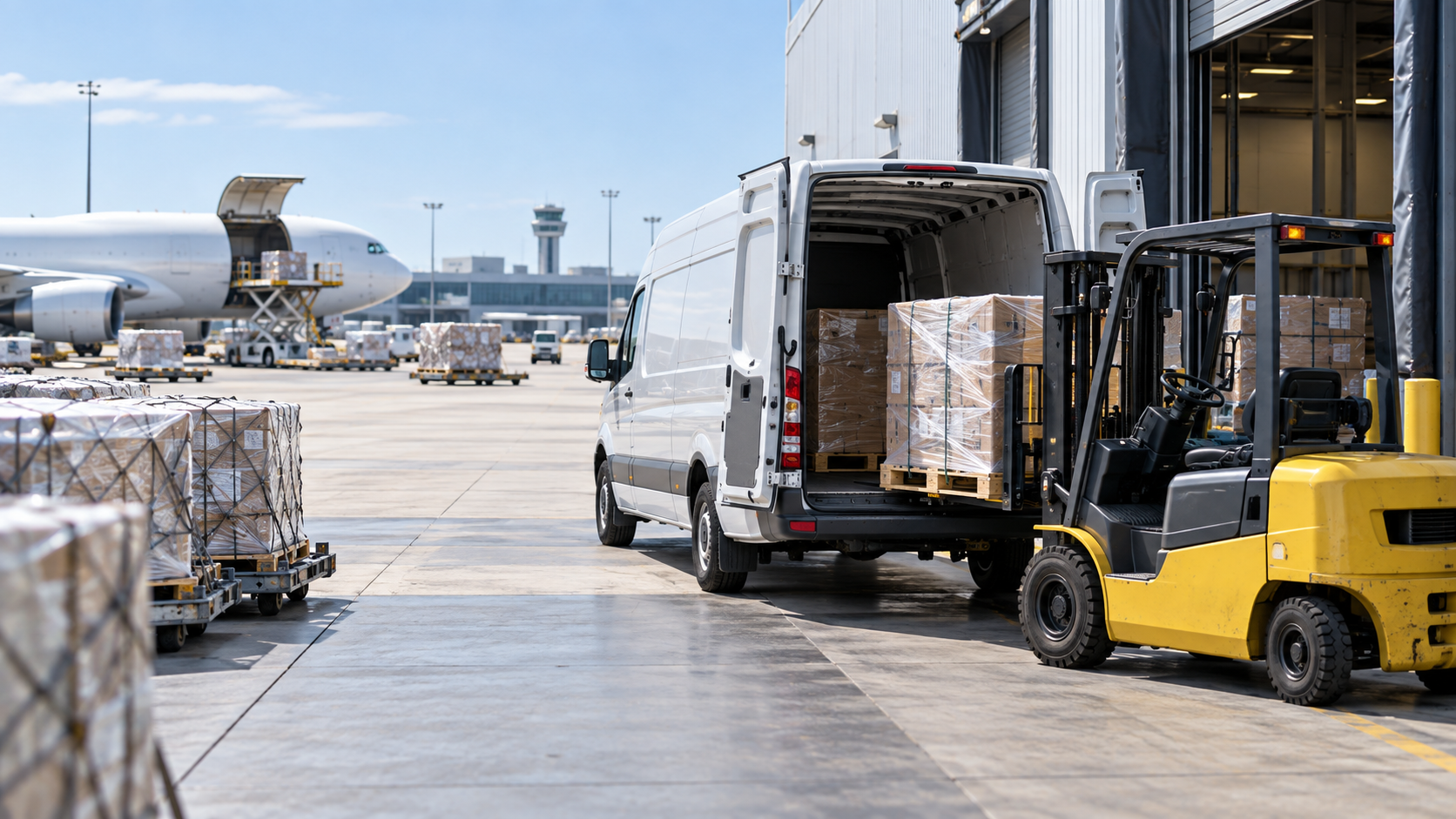
Last mile delivery is the final movement of a shipment to its intended recipient. For businesses, “last mile” may start at an airport cargo facility, an LTL terminal or a local distribution site—and end at a warehouse dock, job site, office or hospital receiving area. This is not necessarily a short or simple step. Release paperwork, appointment slots and equipment can determine whether the shipment actually arrives on time.
Before arranging pickup, find out when the freight will be available and who is authorized to collect it. For air cargo, verify the airway bill or release reference, facility location, collection hours and any required identification or fees. For terminal freight, confirm the shipment has been checked in and can be released. A vehicle arriving before release may incur waiting time without improving delivery.
The final destination might have a dock and forklift, or it might require a liftgate and ground-level placement. Know the packaged dimensions and gross weight, including pallets and crates. Check building access, security procedures, loading-zone restrictions and the receiver’s hours. At a job site, identify a named contact and safe handoff point; a street address alone may not be enough.
Our last-mile delivery service covers tailored final-leg transportation. For larger freight or direct movement, compare dedicated delivery. If the load has no dock, our liftgate delivery guide helps clarify the unloading questions.
The right last-mile partner coordinates all three handoffs: facility to driver, driver to receiver, and delivery documentation back to the shipper. Ask how exceptions are reported and who can change the appointment. If the underlying shipment is time-critical, build a realistic buffer between the terminal’s estimated availability and the final receiving window.
Does last mile delivery always mean residential parcel delivery? No. The phrase also covers B2B freight and equipment moving from a terminal or airport to a commercial destination.