Register
Login

Can You Transport a Dishwasher on Its Side?

Preparing a dishwasher for an approved transport position

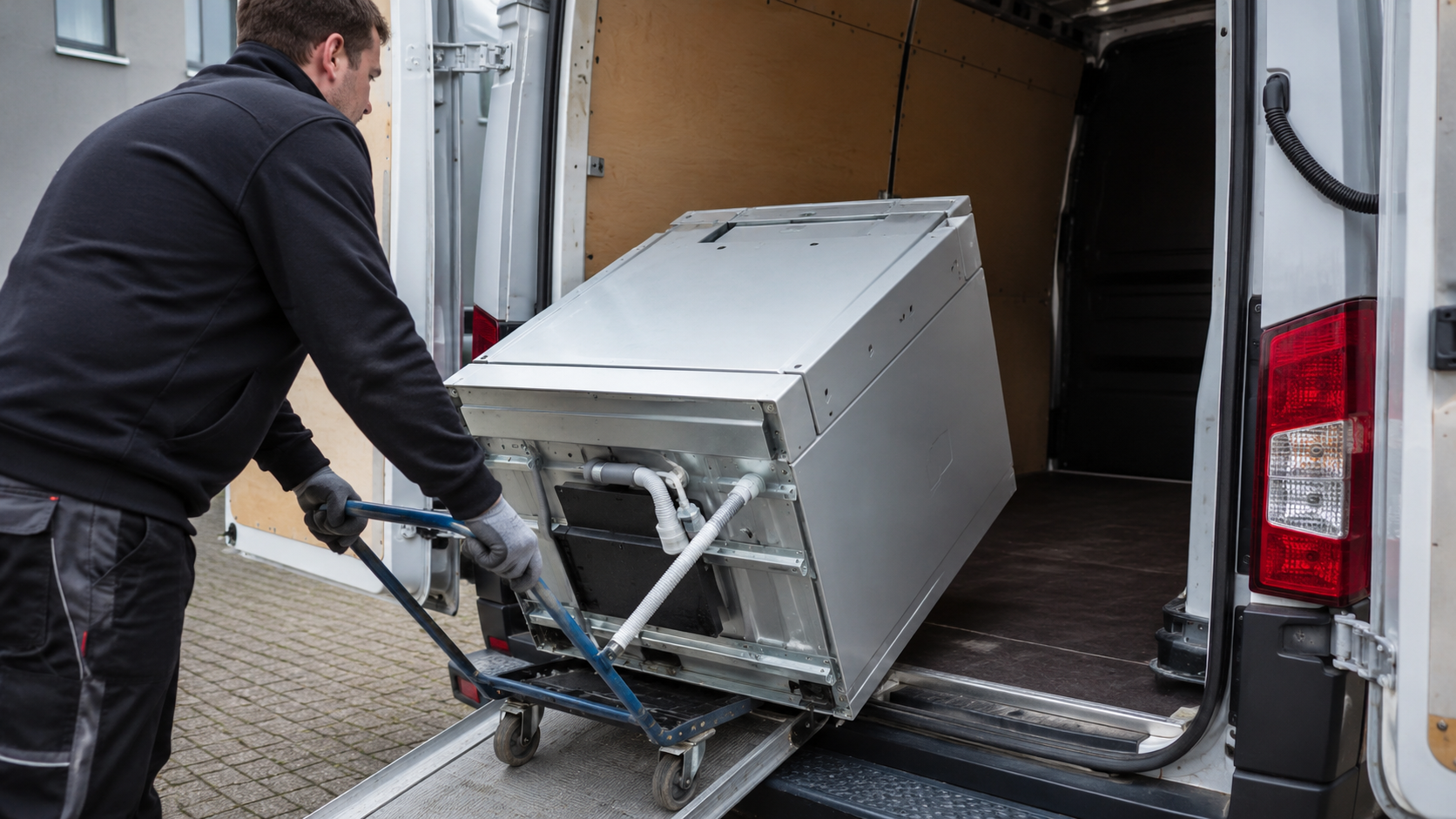
Whether a dishwasher can travel on its side depends on the model and the manufacturer's instructions. There is no safe universal rule that every dishwasher should be laid on the same side, on its back, or kept upright in all circumstances.

Before choosing a vehicle or tipping the appliance, find the exact model's installation, removal, and transportation guidance. If the instructions are unclear, contact the manufacturer with the model number.

Why the model matters

Dishwashers contain pumps, hoses, wiring, insulation, and other components that may be affected by residual water or pressure. Their internal arrangement and permitted handling positions differ. A new unit in its original packaging can also have different instructions from a previously installed machine.

For example, GE Appliances' moving guidance discusses draining a used dishwasher and transporting it on its back with the door facing upward and latched. That advice should not be generalized to other brands or used in place of instructions for your particular appliance.

Prepare the dishwasher before moving it

  1. Identify the model and obtain the relevant instructions.
  2. Arrange safe disconnection of electricity and water.
  3. Have the appliance drained using the manufacturer's procedure.
  4. Secure removable racks and loose accessories as instructed.
  5. Protect hoses, cables, feet, and exposed connections.
  6. Pack the appliance for the accepted transport position.

Built-in units may be hardwired or attached to cabinetry. Use an appropriately qualified professional when removal involves electrical or plumbing work beyond your competence. Do not pull the machine out while connections or mounting points remain attached.

Protect the structure as well as the finish

A padded exterior does not protect the appliance from every load. Avoid resting it on a control panel, handle, connection, or unsupported surface. Do not lift by the door or use it as a lever.

Use appropriate handling equipment and enough trained help for the weight and access. Measure doorways and the vehicle opening before movement. A vehicle that can carry the appliance in its approved orientation is preferable to forcing it into an unsuitable position.

Tell the provider how it must travel

When asking about bulky-item delivery or personal transportation, provide the packaged dimensions, weight, model-specific orientation, and access conditions. State whether collection is from inside the home or an accessible ground-level point.

If palletized freight needs to be lowered from a truck, review the liftgate guide. A liftgate does not include disconnection, stairs, installation, or removal of an old appliance unless separately agreed.

Inspect before reinstalling

Check the package and appliance for visible damage, displaced parts, or stressed hoses. Follow the manufacturer's installation and commissioning steps at the new location. Do not assume a waiting-time rule from refrigerator transport applies to a dishwasher.

The freight shipping guide for individuals helps coordinate receiving and documentation. Keep the model information, transport instructions, and condition photos together. The correct transport position comes from the appliance's requirements, not from a generic moving shortcut.

chevron-rightarrow-right