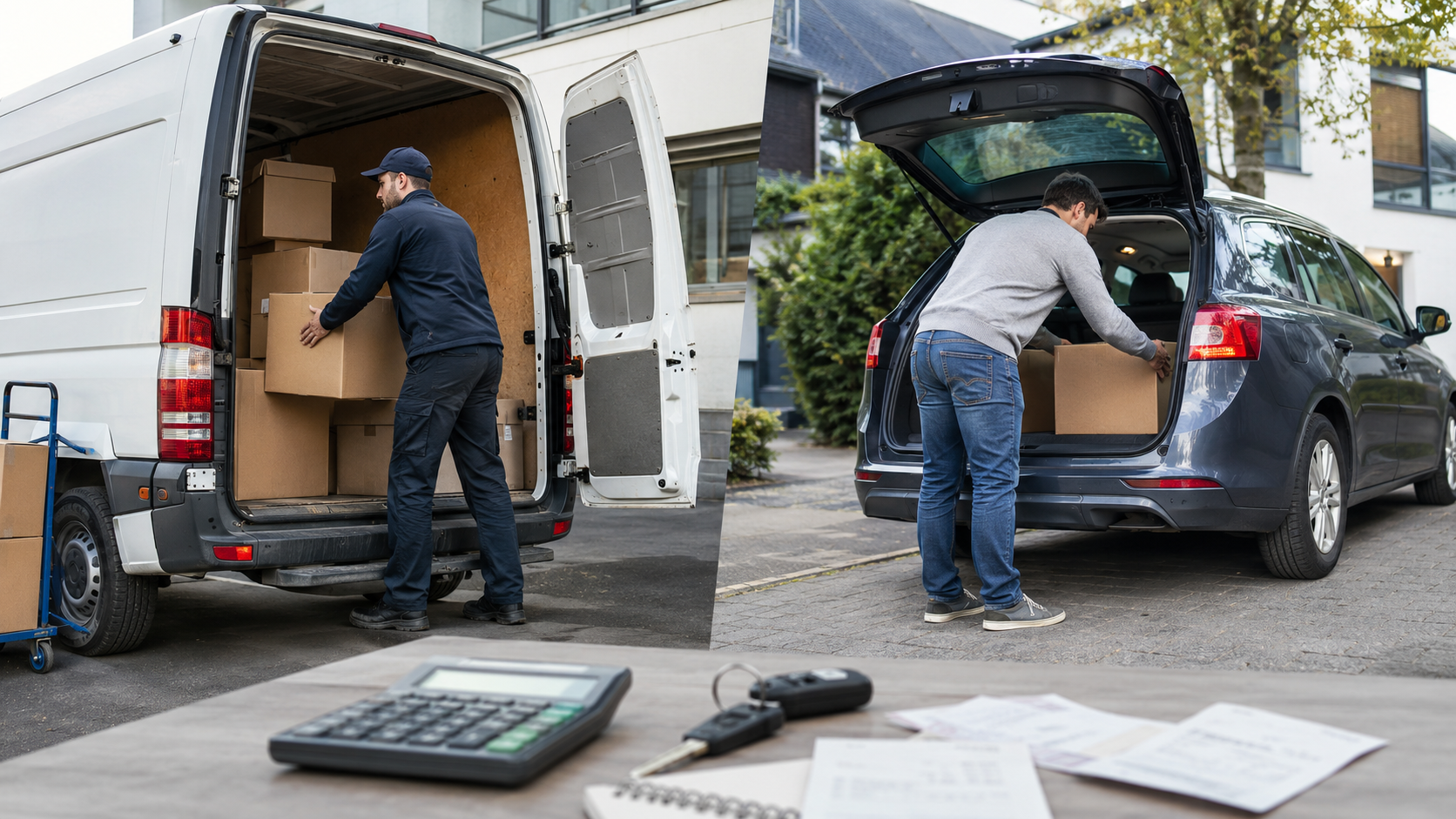
Renting a truck can look inexpensive until you add the miles, fuel, loading time, return trip, and hours taken away from work. A courier quote can look expensive until you compare it with that complete cost.
Both options can make sense. The useful question is which one completes this particular delivery at the right service level with an acceptable use of your time.
List the daily rental charge, mileage charges, fuel, selected coverage, taxes and fees, parking, tolls, and handling equipment. Include the journey to collect the truck and the trip to return it. If you need a helper, add the cost of their time as well.
Calculate fuel using total miles divided by expected miles per gallon, multiplied by the assumed price per gallon. Use a realistic vehicle estimate and allow for the actual route. Compare a round-trip rental with a one-way arrangement only after checking both sets of fees.
Suppose a rental trip involves 100 total miles, five hours of your time, and a truck averaging 10 miles per gallon. Using hypothetical prices, the calculation could look like this:
| Item | Example cost |
|---|---|
| Rental charge | $90 |
| 100 miles at $0.80 | $80 |
| 10 gallons at $4 | $40 |
| Selected equipment, coverage, and fees | $60 |
| Five hours valued at $30 | $150 |
| Total | $420 |
These figures are a calculation example, not current rental or DAGO prices. Replace every assumption with your actual quote. A courier offer should then be compared on the same loading, unloading, and delivery terms.
Self-transport is often practical for a short, flexible trip when you already have suitable equipment, can load safely, and do not sacrifice valuable work time. You retain control over departure and can combine the trip with another useful errand.
It becomes less attractive when a second person is needed, the return trip is long, or a fixed appointment leaves little room for delay. For recurring business needs, the delivery outsourcing guide provides a broader fleet comparison.
Ask whether the quote includes loading help, a liftgate, inside delivery, stairs, and waiting. A driver and vehicle are not automatically a moving crew. For a household item, compare personal transportation options and bulky-item delivery against the specific task.
If heavy freight must reach ground level, review the liftgate delivery guide. If it must reach an upstairs room, arrange that separately before deciding the quote is complete.
Record the item's condition, measure it in its transport packaging, and confirm the receiver's availability. Check the coverage and liability terms for both alternatives instead of assuming a rental policy or transportation charge automatically protects the full value.
A courier can be worthwhile even at a modest premium if it removes a difficult return trip or frees a technician for paid work. A rental can be worthwhile when time is flexible and the handling is straightforward. The full comparison makes that tradeoff visible.