





Routed Delivery
- Quick Pickup: Pickup within 60–120 minutes – Routed Delivery.
- Direct delivery without detours: No stops – fastest delivery time on the market.
- Security & Insurance: Transport insurance for all shipments.
- 99.5% on-time rate: Highest reliability with a guarantee for timely deliveries.
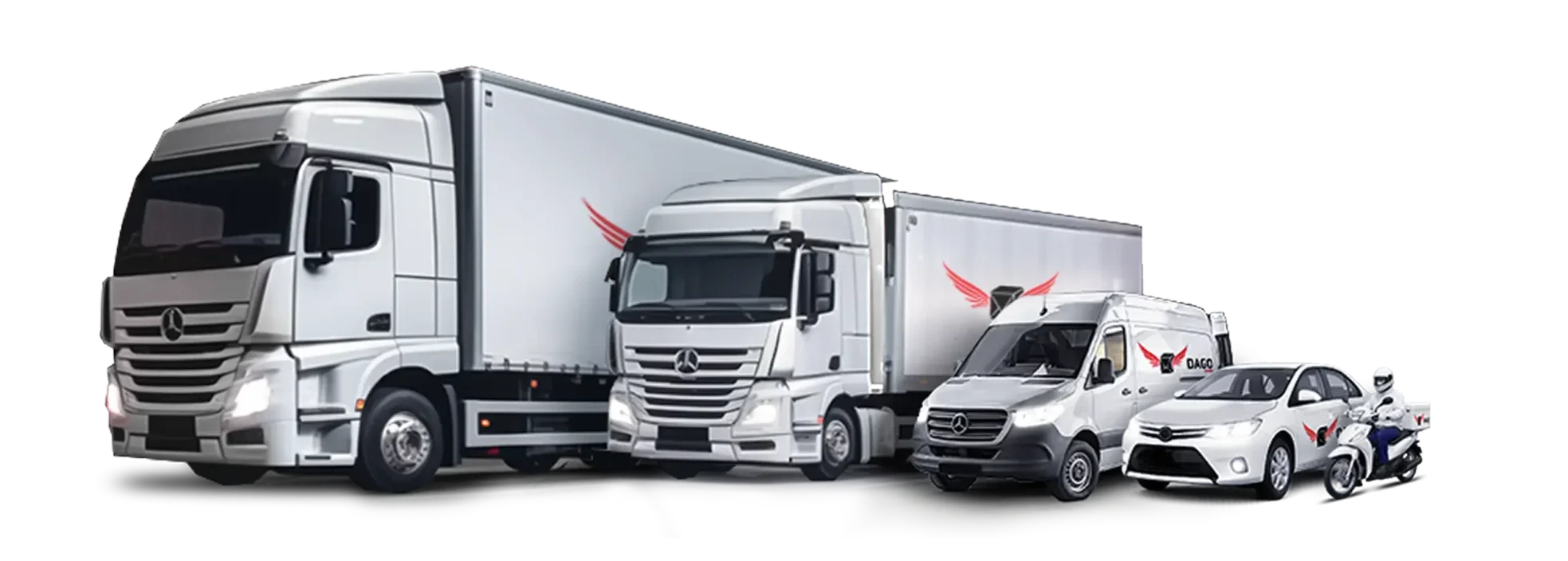
Routed Delivery today ... 🚚📦...why choose us?

Flexible pickup

Direct delivery

Transport insurance

Guaranteed reliability

Monitoring 24/7

Fair prices
Routed Delivery – Fixed Schedules, Optimized Stops, and the Consistency Your Operations Depend On
Routed delivery is the logistics model built for businesses that ship the same cargo types to the same destinations on a predictable rhythm – daily, weekly, or on any custom schedule that matches your operational cycle. Instead of booking individual on-demand pickups each time a need arises, routed delivery pre-plans multi-stop circuits that a dedicated driver runs on a fixed timetable, visiting each location in an optimized sequence that minimizes drive time, maximizes stop density, and delivers within guaranteed arrival windows. The result is lower per-stop cost than ad-hoc dispatching, a familiar driver who knows your docks and recipients, and the operational rhythm that transforms unpredictable logistics into a reliable extension of your own supply chain. In B2B logistics, recurring routed deliveries are often called milk runs – and Delivery in Full and On Time (DIFOT) is the metric that separates adequate service from excellent service. When a hospital system needs daily specimen pickups from twelve clinic locations routed to a central reference lab by 2 PM, when a law firm requires a Monday-through-Friday courthouse filing circuit covering three county courthouses before their morning deadlines, when an auto parts distributor runs a six-stop daily replenishment route to repair shops that cannot afford empty shelves – these are routed delivery operations. DAGO Express designs, operates, and continuously optimizes routed delivery programs 24/7/365 with dedicated drivers, GPS-tracked vehicles, and proof of delivery at every stop.
Our routed delivery program begins with route design: we map your recurring pickup and delivery locations, analyze traffic patterns and time-window constraints at each stop, sequence the circuit for optimal efficiency, and assign a dedicated driver-and-vehicle combination matched to your cargo class. Once the route goes live, our dispatch platform monitors every run in real time, automatically adjusting sequencing when traffic, weather, or volume changes demand it – while your tracking dashboard shows each stop's status from departure through final delivery.
How does routed delivery differ from on-demand and same day courier service?
On-demand courier dispatches a vehicle reactively when an unplanned need arises – one pickup, one delivery, one ad-hoc price. Same day delivery batches shipments for completion before end of business. Routed delivery is proactive: the route is pre-designed, the driver is pre-assigned, and every stop is scheduled days or weeks in advance. The per-stop cost drops significantly because the route is optimized to cover multiple locations in a single circuit rather than dispatching a separate vehicle for each one. For businesses with five or more recurring delivery points on a predictable schedule, routed delivery reduces total logistics spend by 20 to 40 percent compared to booking each stop individually – while providing the same dedicated-vehicle, real-time-tracked, proof-of-delivery standard as any DAGO Express service.
Which businesses benefit most from routed delivery programs?
Healthcare networks – daily specimen collection from multiple clinics routed to a central lab, pharmacy restocks circulating from a distribution center to hospital and retail pharmacy locations, and medical supply replenishment reaching surgical suites on fixed morning schedules. Law firms and professional services – courthouse filing circuits, inter-office document exchanges between multiple locations, and regulatory submission routes covering government agencies on fixed deadlines. Automotive parts distributors – daily or twice-daily replenishment runs from warehouses to repair shops, dealership parts departments, and body shops that operate on just-in-time inventory. Manufacturing supply chains – recurring component deliveries from Tier 1 suppliers to assembly plants on schedules synchronized with production shifts. Financial institutions – branch-to-branch document transfers, check processing circuits, and secure courier routes for banking instruments. Construction companies – daily material deliveries from supply houses to active job sites following crew schedules and pour timelines.



Whatdo wetransport?


Notice
We are ISO 9001 certified. All cross-border transports are carried out by verified and reliable transport partners holding a valid EU license and – if required – an ADR license.
For temperature-controlled transports, we also provide a printout of the temperature profile recorded throughout the entire journey.
How DAGO Express Designs and Operates Routed Delivery Programs – From Route Engineering to Daily Execution
Every routed delivery program follows a five-stage lifecycle. Stage one – Route Engineering: our logistics team maps your recurring pickup and delivery locations, captures time-window requirements at each stop (lab processing cutoffs, courthouse filing deadlines, production shift starts), analyzes traffic patterns by time of day, and sequences the circuit to maximize on-time performance across all stops. Stage two – Vehicle and Driver Assignment: we match a vehicle class to your cargo – climate-controlled van for specimens, cargo van for boxed documents, straight truck for parts inventory – and assign a dedicated driver who will run the same route consistently, building familiarity with every dock, every recipient, and every access procedure. Stage three – Live Execution: the driver runs the route on schedule, with real-time GPS tracking feeding your dashboard, automated stop-completion alerts, and proof of delivery capturing at each location. Stage four – Continuous Optimization: our dispatch platform analyzes route performance data weekly, identifying opportunities to shave transit time, resequence stops based on changing traffic patterns, or add new locations without disrupting the existing schedule. Stage five – Reporting and Accountability: you receive consolidated reports showing on-time percentage, stop-by-stop completion times, and DIFOT metrics – giving your operations team the visibility to measure logistics performance against your internal standards.
This lifecycle approach positions DAGO Express as the routed delivery partner that hospital lab directors, law firm office managers, auto parts operations managers, and manufacturing logistics coordinators trust for the recurring routes their businesses run on. Medical courier precision on daily specimen collection circuits covering a dozen clinics. Messenger service reliability on courthouse filing runs hitting three jurisdictions every morning. Express courier consistency on overnight document exchanges between branch offices. Hot shot trucking capacity when a routed stop requires an oversized or heavy delivery that the standard route vehicle cannot handle. Rush courier escalation when an urgent add-on shipment must intercept the existing route mid-circuit. Same day delivery flexibility when a one-time pickup needs to ride alongside the scheduled stops. On-demand dispatch for unplanned additions that supplement the fixed route without disrupting it. Last mile delivery completion when routed cargo arrives at a hub and needs final distribution to individual recipients. Expedited freight capability when a routed customer escalates a standard shipment to priority overnight. Every recurring scenario, every route variation, every stop.
Laboratory specimens collected from physician offices, urgent-care clinics, and hospital outpatient departments – routed to reference labs on morning and afternoon circuits matching batch-processing windows. Pharmaceutical restocks circulating from distribution centers to hospital pharmacies, retail pharmacies, and long-term care facilities on daily morning schedules. Legal filings, inter-office mail, and regulatory documents running between law firm branches, courthouses, and government agencies on weekday circuits. Automotive parts, accessories, and warranty components moving from regional warehouses to dealership parts counters and independent repair shops on daily or twice-daily replenishment routes. Bank documents, check batches, and financial instruments circulating between branches, processing centers, and clearinghouses on secure morning and afternoon runs. Construction materials, hardware, and permit documents moving from supply houses to active job sites on schedules matching crew rotations.
From medical courier circuits collecting specimens at twelve clinic locations and delivering them to a central reference lab before the 2 PM processing cutoff, to messenger service routes filing documents at three county courthouses every weekday morning, to hot shot additions when a repair shop on the daily auto parts route needs an oversized component that exceeds the standard van's capacity – routed delivery handles recurring logistics at scale while accommodating the exceptions that inevitably arise.
Routes are living programs, not rigid schedules. Adding a new stop, removing a location, shifting a time window, or adjusting volume at an existing stop processes through our dispatch platform and takes effect on the next run – or mid-route in real time if urgency demands it. Seasonal volume spikes, holiday schedule adjustments, and temporary project-based additions are managed through the same platform. If an unplanned rush courier need arises at a location on your existing route, our driver can accommodate it within the circuit or our dispatch can deploy a separate on-demand vehicle to handle the exception without disrupting the scheduled stops. Flexibility is engineered into the program, not bolted on as an afterthought.
Routed Delivery Pricing – Per-Stop Rates That Reward Consistency
When you build a routed delivery program with DAGO Express, pricing is structured per stop rather than per shipment – and the per-stop rate decreases as the number of stops on your route increases. A ten-stop daily circuit costs less per stop than a five-stop route, and a five-day-per-week frequency locks in lower rates than a twice-weekly schedule. This tiered structure rewards the consistency and predictability that make routed delivery efficient for both your business and our operations.
Businesses that convert five or more recurring ad-hoc dispatches into a single optimized route typically reduce their total courier spend by 20 to 40 percent. The savings come from three sources: route optimization reduces total drive miles by sequencing stops efficiently, dedicated driver assignment eliminates per-dispatch mobilization costs, and volume commitment unlocks tiered pricing that individual bookings cannot access. Our route engineering team models the cost comparison during program design, showing you the projected savings before you commit – so the financial case is clear before the first route runs.
Seamlessly. Your routed delivery program runs on its fixed schedule, and any on-demand, rush courier, same day, next day, or overnight express shipment you book operates independently through the same dispatch platform, the same tracking dashboard, and the same account. If an unplanned need arises at a location that is already on your daily route, you can add it to the next scheduled run at your routed rate or dispatch a separate dedicated vehicle for immediate handling – whichever timeline your situation demands. One account, one tracking interface, one invoice covering all service tiers.
Per-stop flat rates cover fuel, mileage, driver, and all standard proof-of-delivery documentation at every location. No fuel surcharges, no per-package add-ons, no stop-count minimums to maintain your tier rate. The per-stop figure quoted during route design is the per-stop figure on your monthly invoice – whether your route runs 5 stops or 25.


