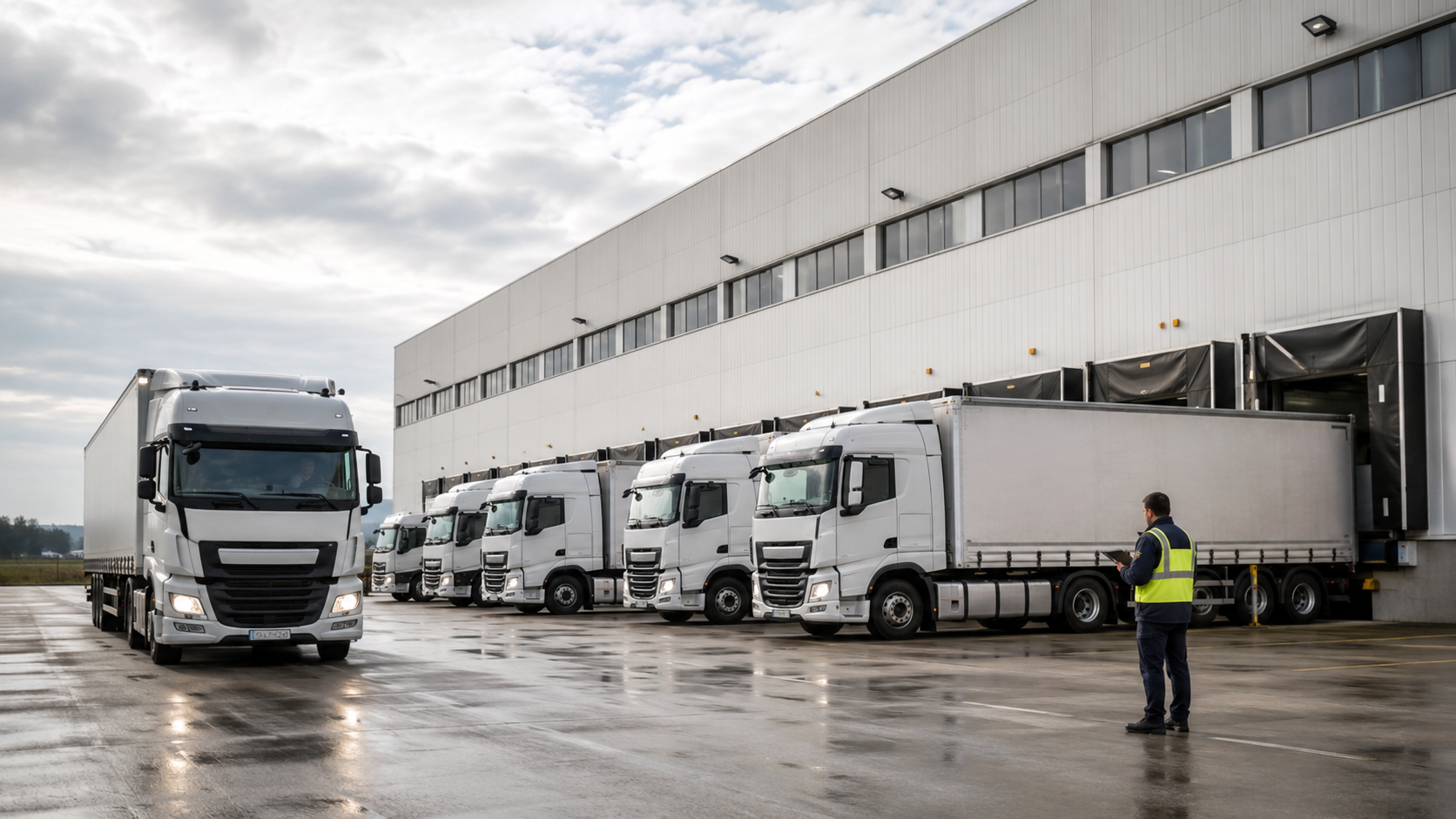
When the same business needs transportation every day, repeatedly sourcing vehicles can create unnecessary work. Dedicated transportation reserves an agreed amount of capacity for a shipper instead of treating every move as an unrelated spot shipment.
The arrangement can include vehicles, drivers, operating windows, or particular lanes. What is reserved must be defined in the agreement. Dedicated capacity does not automatically mean unlimited service or the same individual driver on every trip.
| Model | Main purchasing decision |
|---|---|
| Dedicated operation | Reserve recurring capacity and a defined service scope |
| Full truckload | Book a truck's capacity for a particular movement |
| LTL | Ship freight using shared capacity and a carrier network |
| Urgent direct delivery | Arrange a shipment-specific vehicle for a time-critical need |
A truckload shipment can be part of a dedicated operation, but a single truckload booking does not establish a long-term capacity commitment. The palletized freight and LTL guide explains the shared-network alternative.
It can suit stable warehouse transfers, manufacturing supply, regular retail replenishment, and other repeatable movements. Familiarity with gate procedures, loading sequences, and receiving contacts can reduce errors and coordination time.
Consider dedicated delivery when missed capacity creates operational problems that outweigh the cost of reserving it. If demand is unpredictable, a flexible routed or on-demand arrangement may fit better.
Separate committed charges from variable charges. A proposal may include vehicle and driver availability, a mileage allowance, an operating shift, and additional rates for extra miles, waiting, or weekend work. Ask how fuel adjustments and unused capacity are handled.
As an illustration, assume a dedicated arrangement costs $12,000 per month before variable charges, while comparable spot shipments cost $300 each. Forty spot shipments equal that base amount, but this is not a complete break-even point. Add variable costs, service differences, standby value, and internal dispatch work before deciding. These figures are an example, not a DAGO rate.
Agree on minimum and maximum volume, spare-vehicle coverage, driver absence, maintenance, and peak demand. Define the process for an additional stop or a shipment that exceeds the reserved equipment's dimensions.
For a business with a stable core and occasional surges, partial delivery outsourcing can be a practical compromise. Keep a base operation and arrange overflow separately, with clear acceptance procedures.
For broader business transportation requirements, describe your normal lanes and peak demand. Before committing, run a representative pilot and review the transportation contract checklist. The most useful agreement makes capacity dependable while explaining exactly what happens when your business needs more, less, or different service.